<?xml version="1.0" encoding="utf-8"?><feed xmlns="http://www.w3.org/2005/Atom" ><generator uri="https://jekyllrb.com/" version="3.10.0">Jekyll</generator><link href="https://willcritchlow.com/feed.xml" rel="self" type="application/atom+xml" /><link href="https://willcritchlow.com/" rel="alternate" type="text/html" /><updated>2025-07-09T13:29:54+00:00</updated><id>https://willcritchlow.com/feed.xml</id><title type="html">Will Critchlow. Life, Distilled.</title><subtitle>This is my personal site. I started it while running Distilled, the company I co-founded in 2005. After selling Distilled, I now run SearchPilot.</subtitle><entry><title type="html">My journey with hearing loss and tinnitus from Menière’s disease with partial recovery</title><link href="https://willcritchlow.com/hearing-tinnitus-partial-recovery/" rel="alternate" type="text/html" title="My journey with hearing loss and tinnitus from Menière’s disease with partial recovery" /><published>2025-02-06T00:00:00+00:00</published><updated>2025-02-06T00:00:00+00:00</updated><id>https://willcritchlow.com/hearing-tinnitus-partial-recovery</id><content type="html" xml:base="https://willcritchlow.com/hearing-tinnitus-partial-recovery/"><![CDATA[<p>In early 2020 I found that my left ear felt like it needed to “pop” like anyone who has flown on a plane is familiar with. It felt stuffy and my hearing felt muted. I tried all the tricks, but it wouldn’t resolve.</p>

<p>I’m no doctor, but I suspected that the root cause was probably the late nights, lack of exercise, and generally physically run-down state I was in after a six month due diligence slog to <a href="https://x.com/willcritchlow/status/1224705651072471046">sell my business</a>. I figured I’d give it a bit of time to settle down, and didn’t go to the doctor.</p>

<p>Soon enough, casually going to the doctor wasn’t the easiest thing to do, as the world went into lockdown in the first half of 2020, and I was battling new kinds of work stress as I juggled two jobs getting <a href="https://www.searchpilot.com">SearchPilot</a> off the ground as an independent startup and helping Distilled settle into Brainlabs — all while battling to help both companies thrive and survive in uncertainty and adversity.</p>

<p>Anyway, long story short, I didn’t go to the doctor for a couple of years. During that time, I felt like my hearing got better and worse, but was never too debilitating. In 2022 it took a turn for the worse. I took a high street hearing test, spoke to my GP, and got myself referred to a specialist. An MRI, an examination, and a souped-up hearing test later, and lots of things had been ruled out.</p>

<p>Which seems to be the way that the most likely diagnosis was “ruled in”. I guess squishy meat robots aren’t the easiest things to debug, but it’s still a little frustrating to have a squishy diagnosis. The most likely thing was Menière’s disease. The good news was:</p>

<ol>
  <li>I wasn’t suffering from the vertigo and nausea that some people suffer with</li>
  <li>There was no reason to think that it would affect my other ear</li>
</ol>

<p>The bad news was:</p>

<ol>
  <li>There was no prospect of recovering lost hearing</li>
  <li>It was likely to get worse in the affected ear</li>
</ol>

<p>They said I could look into getting a hearing aid, but I still felt like my hearing fluctuated (something that all the medical professionals I’ve spoken to seemed somewhat sceptical about) and with partial loss in only one ear, I felt like the downsides outweighed the benefits. I’ve since read that a lot of people in similar situations feel the same.</p>

<p>Could be worse. So I figured I’d just put up with it. Didn’t seem like there was a lot else to do.</p>

<p>It was a little frustrating. There were definitely times when I struggled to hear things, and I was excited for the release of the hearing aid functionality in Apple Airpods because I figured it would give me a cheap (free actually, since I already have Airpods) way of finding out if hearing aids would help.</p>

<p>Before the UK could get its act together to license Airpods for “medical” use (it’s not clear to me what the risks are here, and the regulatory state should get a grip and just allow people to try this kind of tech IMO), something changed.</p>

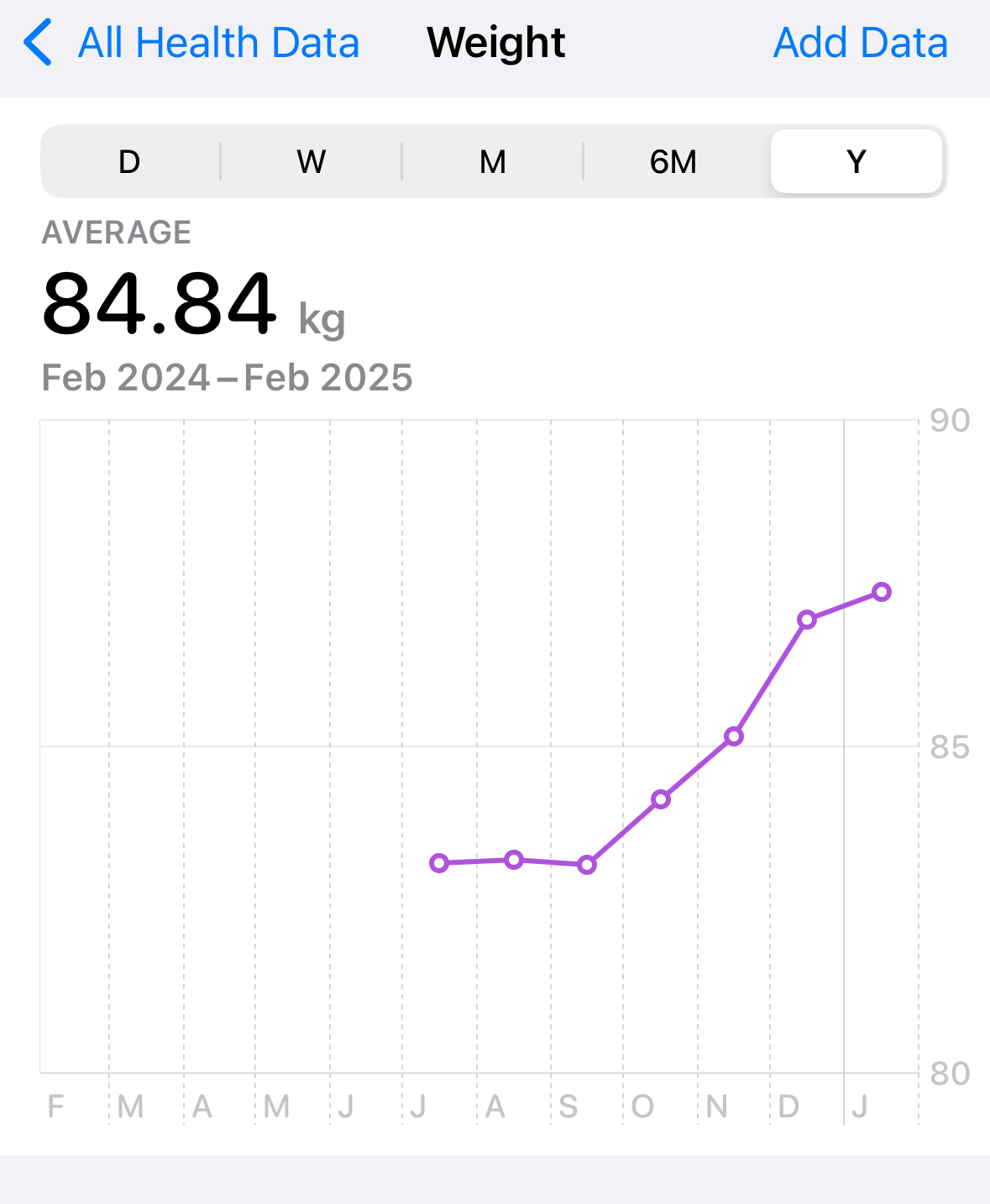
<p>Unrelated to the hearing journey, I decided last summer that it was finally time to level up how seriously I was taking my health and wellness, and I started working out more seriously and overhauled my diet under the watchful eyes of <a href="https://www.dailybodycoach.com/">Daily Body Coach</a>. Prior to that, I’d been staying somewhat in shape playing basketball every week, and had been eating <em>fairly</em> well, but slipping into eating too much bacon and sausage for sure. I’d noticed that I was slowing down, getting injured more, getting soft and pudgier. Inevitable in your mid-40s? No, I thought. I can do better.</p>

<p>So, cutting out almost all processed meat, eating more good protein and less carbs, adding strength, resistence and flexibility training 4x / week on top of a couple of basketball sessions and I was seeing results. I felt leaner and fitter, and I gradually replaced fat with muscle - to the extent that I’m heavier than I’ve been since college - with a recently-measured 14% body fat level. That’s in the top 3% of men my age, apparently. I didn’t get my body fat measured before I started working out more, but based on some estimates of fat loss and measurements of total weight change, I guess I was at around 17% before I started.</p>

<p>For fun, here’s my weight chart:</p>

<p><img src="/assets/images/hearing-tinnitus-partial-recovery/weight.jpg" alt="My weight trend journey" /></p>

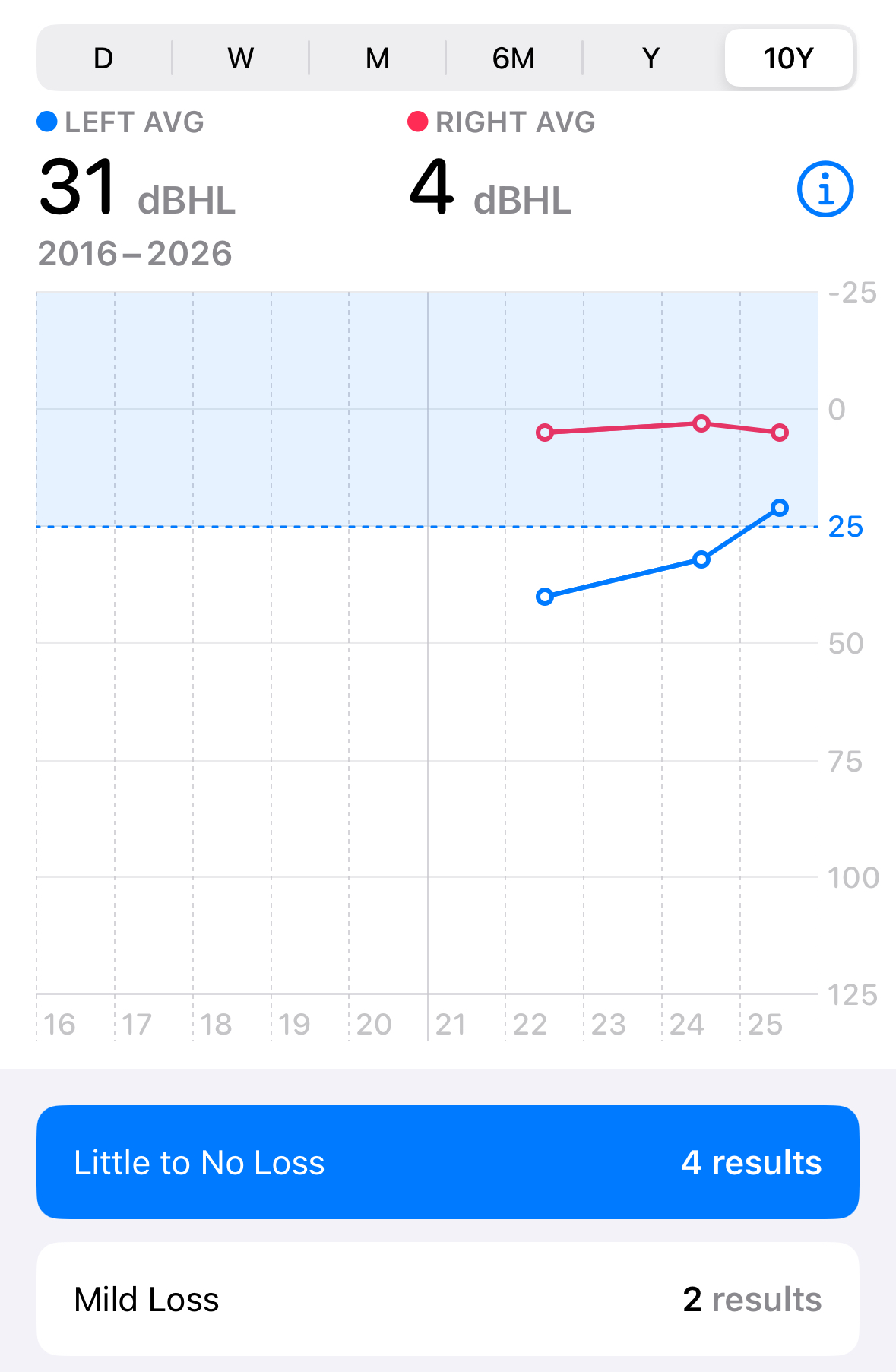
<p>Anyway, that’s not the point. The point is that when Apple released the hearing <strong>test</strong> functionality (which <em>was</em> immediately enabled in the UK) I jumped on it and started tracking my hearing along with all the other stuff I was tracking.</p>

<p>And:</p>

<p><img src="/assets/images/hearing-tinnitus-partial-recovery/hearing.jpg" alt="Trends in my hearing" /></p>

<p>I can’t be sure that the health, exercise, strength and general wellness efforts are the sole reason, or even any of the reason for the hearing improvement, but:</p>

<ol>
  <li>I have confirmed I’m not going crazy - my hearing has fluctuated</li>
  <li>I have seen some improvement - contrary to what the doctor said was possible</li>
  <li>I obviously don’t know if this improvement will stick around</li>
  <li>The latest test has crossed the threshold into the “low to none” band of hearing loss, and subjectively, I’m finding it much less debilitating at this level</li>
</ol>

<p>I don’t know if this changes the diagnosis. I’m going to share all this with my doctor too, but I thought I’d write it up and get it out there in case it helps anyone and so I may be able to connect with others in a similar boat.</p>]]></content><author><name></name></author><category term="health" /><summary type="html"><![CDATA[In early 2020 I found that my left ear felt like it needed to “pop” like anyone who has flown on a plane is familiar with. It felt stuffy and my hearing felt muted. I tried all the tricks, but it wouldn’t resolve.]]></summary></entry><entry><title type="html">Tell me your leadership tricks and tips</title><link href="https://willcritchlow.com/leadership-tips/" rel="alternate" type="text/html" title="Tell me your leadership tricks and tips" /><published>2018-12-18T00:00:00+00:00</published><updated>2018-12-18T00:00:00+00:00</updated><id>https://willcritchlow.com/leadership-tips</id><content type="html" xml:base="https://willcritchlow.com/leadership-tips/"><![CDATA[<p><img src="/assets/images/1_dcT9iRM_gvwVdsyvo9Hbtg.webp" alt="Photo by Caleb George on Unsplash" /></p>

<p>Most of us want to be better at things. One of the things I want to be better at is <strong>leadership</strong>. I’d like to be better both in an abstract “I like learning and improving” kind of a way and also in a “it’s kind of my job and would probably make me more effective” kind of a way.</p>

<p>I decided to write this out for two reasons:</p>

<ol>
  <li>I’d like to <strong>hear your tips and habits</strong> — what do you do that helps you be more effective at getting groups of people pulling in the same direction, achieving group goals etc?</li>
  <li>I’m trying some new things, and I thought that if I wrote them out, I’d both think about them more deeply and also <strong>add a bit of accountability</strong> when I come back and see how much stuck</li>
</ol>

<h1 id="things-ive-done-for-a-while">Things I’ve done for a while</h1>

<p>I’ve written a bit about <a href="https://moz.com/blog/how-i-get-things-done-and-how-you-can-too">personal productivity</a> before and as I look back at it, there’s a bunch of overlap between what I thought and wrote about productivity and the day-to-day of leadership: avoiding being a bottleneck, keeping track of open loops and delegated tasks to hold people accountable, and trying to work on the right things. Some of the things in that post have stuck, and I still do them ~8.5 years later, but even the things that have changed over the years benefited from writing them out, I think.</p>

<p>Since publishing that post, we have started using <a href="https://15five.com">15five</a> which I find really helps me with the <em>weekly</em> review cadence but re-reading it also reminds me that I’ve been less good recently at explicit daily reviews, and at systematically keeping track of open loops to follow up with people about.</p>

<p><strong>Keep a list of things to discuss with each direct report</strong></p>

<p>I believe pretty strongly in giving the team as much autonomy as possible, and part of that is staying out of their way. To that end, I do a few things to try to be mindful of <em>their</em> time and productivity. One of the best tips I’ve received which applies not only to managers but also to peers and managees as well:</p>

<blockquote>
  <p>Keep a list of things you want to talk to each collaborator about. Whenever something non-urgent comes up, add it to the list instead of interrupting them to discuss it immediately.</p>
</blockquote>

<p>I keep this in one long Trello list, starting each card with the person’s name for easy filtering. For my direct reports, I review my list of things to discuss in our weekly 1:1s.</p>

<p><strong>Have weekly 1:1s with each direct report</strong></p>

<p>Speaking of 1:1s, my only weekly meetings are:</p>

<ul>
  <li>Weekly 1:1s with each of my direct reports (mainly their meeting but reviewing my list as well)</li>
  <li>Weekly team meeting with the leadership team (relatively unstructured catch-up since we aren’t colocated)</li>
</ul>

<p>I’ve tended to schedule the more strategic meetings (quarterly / annual planning and the like) in a more ad hoc way, but I’d like to be better about the repeated cadence of those.</p>

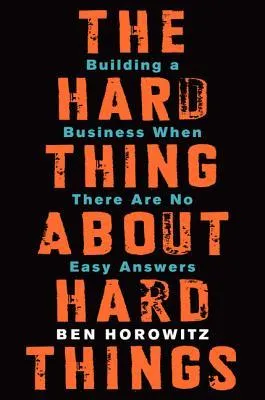
<p><img src="/assets/images/1_y5RWCJCSvql9azdXfirvsg.webp" alt="The Hard Thing About Hard Things" /></p>

<p><em>The key to a good one-on-one meeting is the understanding that it is the employee’s meeting rather than the manager’s meeting. This is the free-form meeting for all the pressing issues, brilliant ideas, and chronic frustrations that do not fit neatly into status reports, email, and other less personal and intimate mechanisms.</em></p>

<p><strong>Work off a short list of focused priorities that is separate to your todo list</strong></p>

<p>More related to personal productivity, I found it was transformational a few years ago when <strong>I stopped working off a todo list</strong>. I still have a backlog where I dump things I want to do, and have time-based alerts and reminders for specific things that have to be done on certain days (and of course calendar entries for specific time slots), but I try not to pick a thing to work on by just turning to the never-ending todo list and picking something. Instead:</p>

<blockquote>
  <p>Select things off the list in a more mindful way and have a very short list of things to do each day and each week</p>
</blockquote>

<p><strong>Have internal and external opinions</strong></p>

<p>Everyone has their own style, but I personally find it good for me and good for the team if I stay abreast of changes in our ever-evolving industry, and <strong>have opinions</strong> on the trends.</p>

<blockquote>
  <p>As a result I write and talk a fair bit about the future: the <a href="https://www.distilled.net/resources/eu-ruling-google-in-trouble/">future of the big technology players</a>, the <a href="https://www.distilled.net/resources/how-split-testing-is-changing-consulting/">future of the industry itself</a>, and the <a href="https://www.distilled.net/resources/the-next-trillion-searches/">future of user behaviour</a> (and what <a href="https://www.distilled.net/resources/voice-marketing-tactics-theres-only-100k-searches-a-month-up-for-grabs-anyway/">it’s not</a>).</p>
</blockquote>

<p>I <em>think</em> that this helps me make better decisions, but also helps align the company, gives my colleagues information to share with clients and prospects, and bolsters confidence in our shared direction.</p>

<p>Interestingly, I also find that some of my most productive days are when I do a similar thing internally:</p>

<blockquote>
  <p>My best days involve hammering out first drafts of things and / or “editorial” review and oversight of others’ drafts.</p>
</blockquote>

<p>I think there’s a certain kind of leadership role that looks a lot like being an editor.</p>

<h1 id="things-im-trying-to-start-doing">Things I’m trying to start doing</h1>

<p>I like thinking about self-improvement at this time of year so I can pretend I’m not making new year’s resolutions which I have a kind of in-built aversion to. I’d rather <em>pretend</em> I’m doing this stuff because I want to rather than because it’s a date when society tells us to focus on self-improvement.</p>

<p><strong>Get better at trying new things with an explicit plan for stopping if they don’t work</strong></p>

<p>I’ve found myself saying (often <strong>to</strong> myself) a lot recently:</p>

<blockquote>
  <p>If you want to <strong>get</strong> something different, <strong>do</strong> something different.</p>
</blockquote>

<p>So: I’m trying to hold myself accountable to figure out the areas where I want something different to happen and ensure that I’m going to do something different in that area of life / work.</p>

<p><strong>But</strong> I recognise that two of my weaknesses converge in this area to make me struggle:</p>

<ol>
  <li>I often have a status quo bias and a tendency to lean towards incremental change that I need to fight to make decisive changes</li>
  <li>I need to be better at having the discipline to review the portfolio of “new things” on a regular schedule and shut down / change the experiments that aren’t working</li>
</ol>

<p>Apart from talking to my team to bolster my weaknesses in this area and hold me to account, I’ve also started a “decision log” where I’m trying to track all the significant decisions I make so that I can both hold myself to account and get a feedback loop to teach myself that quick decisions are generally better than no decisions.</p>

<p><strong>Connect our objectives together better</strong></p>

<p>We have run a quarterly OKR process for years, but I want to get better at:</p>

<ol>
  <li>Connecting the quarterly objectives up to longer-term goals</li>
  <li>Telling the story of how our objectives connect to the underlying “why” we’re doing the things we’re doing</li>
</ol>

<p>In order to make them truly effective, I also want to improve my “administration” of the objectives and goals process. I don’t find it naturally easy to have frequent and regular review processes, but this is an area where I recognise their value.</p>

<p>One really tactical thing I want to improve in this area is the weekly email I send to the whole company. It’s been / has become very focused on news (client wins and losses, new hires, significant milestones etc) but I’d like to get better at both storytelling and joining the dots from today’s news to overall performance.</p>

<p><strong>Communicate better</strong></p>

<p>While I occasionally daydream about running a company that can all get together in one place easily, or at least is on the same freaking timezone, that’s not the one we have. Running even a small leadership team that is separated by 8 hours of timezones and nearly 5,000 miles is hard enough, but having the whole company spread out the same way adds challenges.</p>

<p>There are simple things that help that we nevertheless found difficult to do continuously. We recently picked back up with regular all-hands meetings after they became a little stale and lapsed. A new format, and regularity without extreme frequency (we’ve restarted them quarterly) should hopefully help.</p>

<p>I <em>feel</em> that a simple cadence of structured communications should help here, but I find it really hard to maintain the rhythm:</p>

<blockquote>
  <p>Weekly: status update email</p>

  <p>Monthly: metrics and performance</p>

  <p>Quarterly: all-hands, OKR comms and retrospective</p>
</blockquote>

<p>The need to get better at company-wide comms is probably the biggest recurring theme of feedback I’ve had over the years at Distilled, which is why so much of this is focused on that area.</p>

<h1 id="things-ive-seen-others-do-that-id-like-to-be-better-at">Things I’ve seen others do that I’d like to be better at</h1>

<p>One of the downsides of running your own company is that you tend to <a href="https://www.saastr.com/it-takes-at-least-7-years-in-saas-can-you-do-the-time/">end up doing it for a long time</a> and so you don’t get as much exposure to different management styles and others’ ways of doing things. Because I don’t get to go and work for a different boss, I have to extrapolate from public and semi-public hints of great things other people do (and that’s one of my reasons for writing this post).</p>

<p>But. Some things I <strong>have</strong> seen that I’d love to emulate:</p>

<p><strong>Write. Just write. For an internal audience</strong></p>

<p>Most of my writing is either for an external audience, or is relatively formulaic and structured. For an internal audience, I write status updates, I write objectives, and I write pitches and business cases, but I don’t write things that look like blog posts that are only to be shared with the team.</p>

<p>A founder friend of mine told me how he spends a couple of hours a week, typically first thing on a Monday morning, writing. Just writing for his team:</p>

<blockquote>
  <p>Every Monday I write an essay for the company on some topic that I feel is pertinent to the whole organization.</p>
</blockquote>

<p>I think I can get better at this because I can see the white space that gets left between my public writing (which might have personality but doesn’t contain secrets) and too much of my private writing (which can tend to the formulaic).</p>

<p>I’d like to learn to fill that gap with more open discussion of challenges and opportunities we face to avoid what my colleague <a href="https://twitter.com/thcapper">Tom Capper</a> described as:</p>

<blockquote>
  <p>…open secrets, discussed in hushed tones…</p>
</blockquote>

<p>Shining a light on the “open secrets” and discussing them more widely should help us dig out conflict and get aligned.</p>

<p><strong>Decide already</strong></p>

<p>I’m lucky to be surrounded by leadership team colleagues who are better at this than I am and who push me to be better.</p>

<blockquote>
  <p>It’s important to make good decisions. But I spend much less time and energy worrying about “making the right decision” and much more time and energy ensuring that any decision I make turns out right.</p>
</blockquote>

<p><em>—</em> <a href="https://hbr.org/2013/11/stop-worrying-about-making-the-right-decision"><em>Scott McNealy, Sun Microsystems</em></a> <em>via my colleague Craig’s</em> <a href="https://www.slideshare.net/DistilledSEO/craig-bradford-creating-digital-strategy/14-Its_important_to_make_good"><em>SearchLove talk</em></a></p>

<p><a href="https://twitter.com/jess_champion">Jess</a>, who runs our London team, is particularly good at both showing what this looks like in practice and at pushing me to improve here.</p>

<p><strong>Routines can be a good thing when it comes to metrics and performance</strong></p>

<p>Back in 2011, we <a href="https://techcrunch.com/2011/05/24/server-density-scores-angel-funding-and-rolls-out-app-store-for-sysadmins/">made a small angel investment in a startup called Server Density</a> (which <a href="https://www.techradar.com/uk/news/stackpath-and-server-density-announce-merger">merged with StackPath earlier this year</a>). One of the things I always loved as an investor was the regularity with which the founder, <a href="https://davidmytton.blog/">David Mytton</a> sent out metrics and status updates. He ran a diligent personal process to review metrics at the beginning of every month and sent his update out on or close to the first of each month.</p>

<p>He was (and no doubt still is) exceptionally good at choosing a standard format that conveyed a lot of information very efficiently and then reporting in that format regularly and in a timely fashion along with less structured, more freeform information to put the metrics in context. He did this through good times and bad, for himself, his investors and his wider team, and with a diligence that I definitely aspire to.</p>

<p>He covered some of his thinking behind the updates in his post on startup board meetings:</p>

<blockquote>
  <p>You can’t have a proper discussion if the participants do not have the same level of knowledge… The best decisions happen when everyone if sufficiently informed to have a debate about the issue at hand and be able to effectively advocate for their point of view.</p>
</blockquote>

<h1 id="my-call-for-ideas-and-support">My call for ideas and support</h1>

<p>I said that one of my big reasons for writing this was to <strong>get your input</strong>. What do you do? What have you seen others do?</p>

<ul>
  <li>If you know me, tell me what you’d like to see <em>me</em> do specifically</li>
  <li>Tell me your favourite leadership habits and behaviours</li>
  <li>Tell me the best habits and behaviours you have observed in others</li>
</ul>

<p>Thank you. I hope something I’ve written here is helpful to <strong>you</strong> in return.</p>]]></content><author><name></name></author><category term="culture" /><summary type="html"><![CDATA[]]></summary></entry><entry><title type="html">What do you do when your video conferencing software is sexist?</title><link href="https://willcritchlow.com/what-do-you-do-when-your-video-conferencing-software-is-sexist/" rel="alternate" type="text/html" title="What do you do when your video conferencing software is sexist?" /><published>2018-05-04T16:17:54+00:00</published><updated>2018-05-04T16:17:54+00:00</updated><id>https://willcritchlow.com/what-do-you-do-when-your-video-conferencing-software-is-sexist</id><content type="html" xml:base="https://willcritchlow.com/what-do-you-do-when-your-video-conferencing-software-is-sexist/"><![CDATA[<p><img src="/assets/images/1_znQJ9QO7vwypsv2mZPiUxQ.webp" alt="Photo by Israel Palacio" /></p>

<p>Sometimes, I interrupt people in meetings.</p>

<p>I try not to, and I’m working on being better at noticing and calling myself out, and at noticing when others do it and calling them out too.</p>

<p>But I’m definitely not perfect at it.</p>

<p>This is not ideal: I’m a lucky and privileged white dude running a company. I want everyone in meetings to contribute, to feel heard, to <strong>be</strong> heard, to <a href="https://rework.withgoogle.com/en/guides/understanding-team-effectiveness">be safe</a>.</p>

<p>So I keep working on myself. And I <em>try</em> not to ask others to change to fit my arbitrary way of expressing myself. I don’t want you to have to call me out, to speak up louder, to interrupt me back. But recently I’ve hit an interesting edge case and I wonder if anyone else has come up with a good way of dealing with it.</p>

<h2 id="whats-this-got-to-do-with-video-conferencing">What’s this got to do with video conferencing?</h2>

<p>I imagine most of you have made video calls. A good number have most likely been in group meetings conducted over video. We have a weekly leadership team meeting spanning three offices and eight timezones and attended by 6 of us: me, three other men and two women.</p>

<p>Both the women are based in the same office as me, and so I’m often in-person with them and joined by our two American office VPs remotely. I’d been noticing that the remote attendees seemed to ask the women to repeat themselves more often than they asked the men. Then: last week both the women were dialling in from out of the office and I realised: <strong>it was so much harder to hear them than it was to hear the men who were dialling in</strong>. This is not generally the case in-person — those of us sat together in the room can all hear each other just fine.</p>

<h2 id="so-i-got-to-thinking-is-our-hangout-software-sexist">So I got to thinking: is our hangout software sexist?</h2>

<p>I’m sure there is no grand conspiracy here: women <a href="https://books.google.co.uk/books?id=yWkUAAAAQBAJ&amp;dq=%22There+appear+to+be+differences+of+voice+volume+between+the+sexes+with+men+generally+talking+more+loudly+although+women+are+more+likely+to+compensate+for+external+noise+by+increasing+vocal+intensity+Scherer+and+Giles+1979%22&amp;pg=PT19&amp;redir_esc=y#v=onepage&amp;q=%22There%20appear%20to%20be%20differences%20of%20voice%20volume%20between%20the%20sexes%20with%20men%20generally%20talking%20more%20loudly%20although%20women%20are%20more%20likely%20to%20compensate%20for%20external%20noise%20by%20increasing%20vocal%20intensity%20Scherer%20and%20Giles%201979%22&amp;f=false">may in general talk more softly than men</a>, and they on average have higher-pitched voices. I suspect that the former in particular is straight-forwardly to blame: the algorithms that cut out background noise, and enhance the voice of whoever is speaking no doubt work better when you speak louder. It seemed that this combines to mean that the women cut out more often or had their speech garbled.</p>

<p>What if it’s not just a volume thing, and the compression and enhancement algorithms also work better when you speak in a <strong>lower</strong> voice?</p>

<p>Is it possible that most of the testing has been done with groups of men / mainly men? [See: <a href="https://petapixel.com/2015/09/19/heres-a-look-at-how-color-film-was-originally-biased-toward-white-people/">how colour film was biased towards white people</a>]. Is it possible that when women have been in the test meetings, they have forced themselves to speak up more than they naturally would, to be heard?</p>

<p>It’s surely possible to imagine an algorithm designed to counteract this? Has anyone tried?</p>

<p>Because the last thing I want to do is ask the women in the meetings to <strong>just speak up</strong>, to <strong>just drop their voice a bit</strong>. That’s <a href="https://www.fastcompany.com/3068806/what-a-speech-coach-told-me-about-speaking-like-a-woman-and-why-its-bs">BS</a>.</p>

<p>But I’m struggling. While I’m not in control of the video conferencing software, what else can I do?</p>

<p>Has anyone else noticed this phenomenon? Solved it? Got any bright ideas?</p>

<p>I’m all ears.</p>]]></content><author><name></name></author><category term="culture" /><summary type="html"><![CDATA[]]></summary></entry><entry><title type="html">Working between the US and the UK</title><link href="https://willcritchlow.com/us-uk-culture-communication/" rel="alternate" type="text/html" title="Working between the US and the UK" /><published>2017-12-06T16:17:54+00:00</published><updated>2017-12-06T16:17:54+00:00</updated><id>https://willcritchlow.com/us-uk-culture-communication</id><content type="html" xml:base="https://willcritchlow.com/us-uk-culture-communication/"><![CDATA[<p><em>This post started as an internal message to share with our team some interesting insights and things I’d learned from a talk I attended last week, but as I wrote it, I thought that it might be interesting to a wider audience.</em></p>

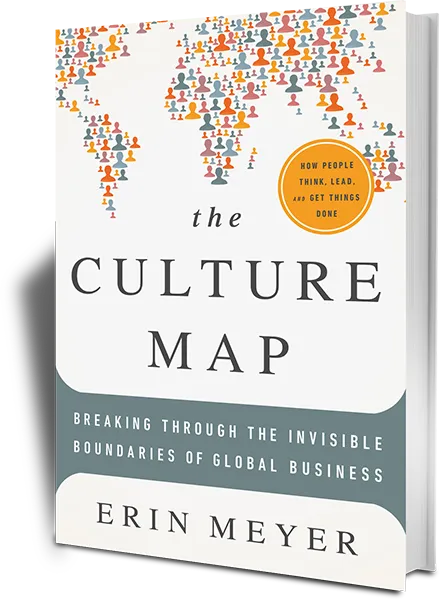
<p>I attended a talk by <a href="http://www.erinmeyer.com/">Erin Meyer</a> who wrote the book <a href="http://erinmeyer.com/book/">The Culture Map</a>. She’s a professor at INSEAD, and an expert in managing global teams.</p>

<p><img src="/assets/images/1_mETdVwbnXNRgWilbQ4nW9Q.webp" alt="Erin Meyer’s book The Culture Map" /></p>

<p>I found the whole talk interesting — with tons of anecdotes about global business and differences between cultures — but obviously for me, in my role at Distilled, there were real practical uses for learning more about US and UK communication styles in particular.</p>

<h1 id="drawing-me-in-with-anecdotes">Drawing me in with anecdotes</h1>

<p>Most of my business experience is in the UK, US, and Europe, and so the anecdotes that stood out to me most strongly from Erin’s talk were business tales from Asia. Two specific stories that stuck with me were:</p>

<ol>
  <li>The Hindi word “kal” (“कल”) which <a href="https://www.quora.com/Why-is-the-word-for-tomorrow-and-yesterday-%E2%80%9Ckal-%E2%80%9D-the-same-in-Hindi-Urdu-because-if-there-was-or-is-unnecessary-to-differentiate-the-two-if-the-meaning-is-apparent-from-its-context-then-how-is-this-not-the-case-with-languages">can mean either “tomorrow” or “yesterday”</a> — used as the foundation of a story about the differences in the way we perceive and talk about time. This led to a funny anecdote about a group where the British were complaining about the timekeeping of their French counterparts which mystified their German colleagues who thought the exact same criticisms applied to the Brits</li>
  <li>A time that Erin was giving a seminar in (I think) Japan to a group of 10–15 people. At the end of her talk, she asked if anyone had any questions, and was met with a smiling silence. She went to move on, and her Japanese point of contact asked for a moment. <em>He</em> asked the group if they had any questions and was also met with silence. He waited an uncomfortable (for Erin!) length of time before calling on one of his colleagues by name, who responded with a polite “thank you, yes, I did have a question”. She was mystified!</li>
</ol>

<p>The specific importance of this to UK / US collaboration was underscored by an off-hand comment Erin made in the Q&amp;A when she noted that when people relocate from the UK to Japan or the US to China, they <strong>expect</strong> to find a different culture, and generally acclimatise well. The most common failures to acclimatise come when people relocate to <strong>similar but subtly different</strong> cultures that fall in the “uncanny valley” of feeling similar enough to home to be familiar, but different enough to be disconcerting and disorienting. Unsurprisingly, this applies to the US-UK “separated by a common language” (my favourite commentator on this is <a href="https://twitter.com/lynneguist">@lynneguist</a>).</p>

<p>Although both the US and the UK came up a few times as examples during her talk, it was the <a href="http://erinmeyer.com/tools/">resources she shared</a> that have crystallised the usefulness and the details:</p>

<h1 id="understanding-the-similarities-and-differences-between-the-us-and-uk">Understanding the similarities and differences between the US and UK</h1>

<p>Erin kindly shared access to her tools and resources for attendees of her talk and so I obviously started out mapping the UK / US similarities and differences (note: focusing on communication / business culture — not just <a href="https://www.quora.com/What-is-most-shocking-thing-to-find-when-someone-from-the-USA-visits-Europe">every surprise a traveller might encounter</a>).</p>

<p>You can <a href="http://erinmeyer.com/tools/culture-map-premium/">run your own analyses for just a few dollars</a> but I want to talk about just a few key parts of the US / UK comparison. The UK and US fall relatively close together on most of the dimensions and differences are a matter of degree.</p>

<p>The two biggest differences of degree are:</p>

<ol>
  <li><strong>“Trusting”</strong> — both lean towards “task-based” trust compared to “relationship-based” trust but the US is far more extreme on this spectrum which might mean that Brits should seek to impress their American counterparts through diligent, prompt delivery and the immediate keeping of work promises while Americans might have to learn that their British colleagues need to get to <em>know</em> them and <em>like</em> them alongside the professional relationship</li>
  <li><strong>“Communicating”</strong> — both lean towards “low-context” compared to “high-context” communication (which is something common across the English-speaking world). This essentially means that good communication is simple and clear, taken at face value, and repeated if necessary. Although much lower-context than much of the rest of Europe and Asia, the British communication style is higher-context than is normal in the US — with more expectation of reading between the lines and more subtlety. Brits: speak and write more explicitly and bluntly. Americans: expect nuance and ask for clarification if you need (and remember, if we’re mean to you, it means we like you)</li>
</ol>

<p>Having seen the second of those, it seemed both appropriate, and no surprise to me that the first line of our <a href="https://www.distilled.net/manifesto/">company manifesto</a> is “communication solves all problems” — but also that we might need to be clearer on the differences in what “good communication” means as we criss-cross the Atlantic.</p>

<h1 id="leadership-and-decision-making">Leadership and decision-making</h1>

<p>The one area where we see UK / US cultures cross over each other from one side to the other are in the slightly-similar-sounding <strong>leading</strong> and <strong>deciding</strong> dimensions.</p>

<p><img src="/assets/images/1_0ZUWkGWSnn19ysXoRUuMcg.webp" alt="captionless image" /></p>

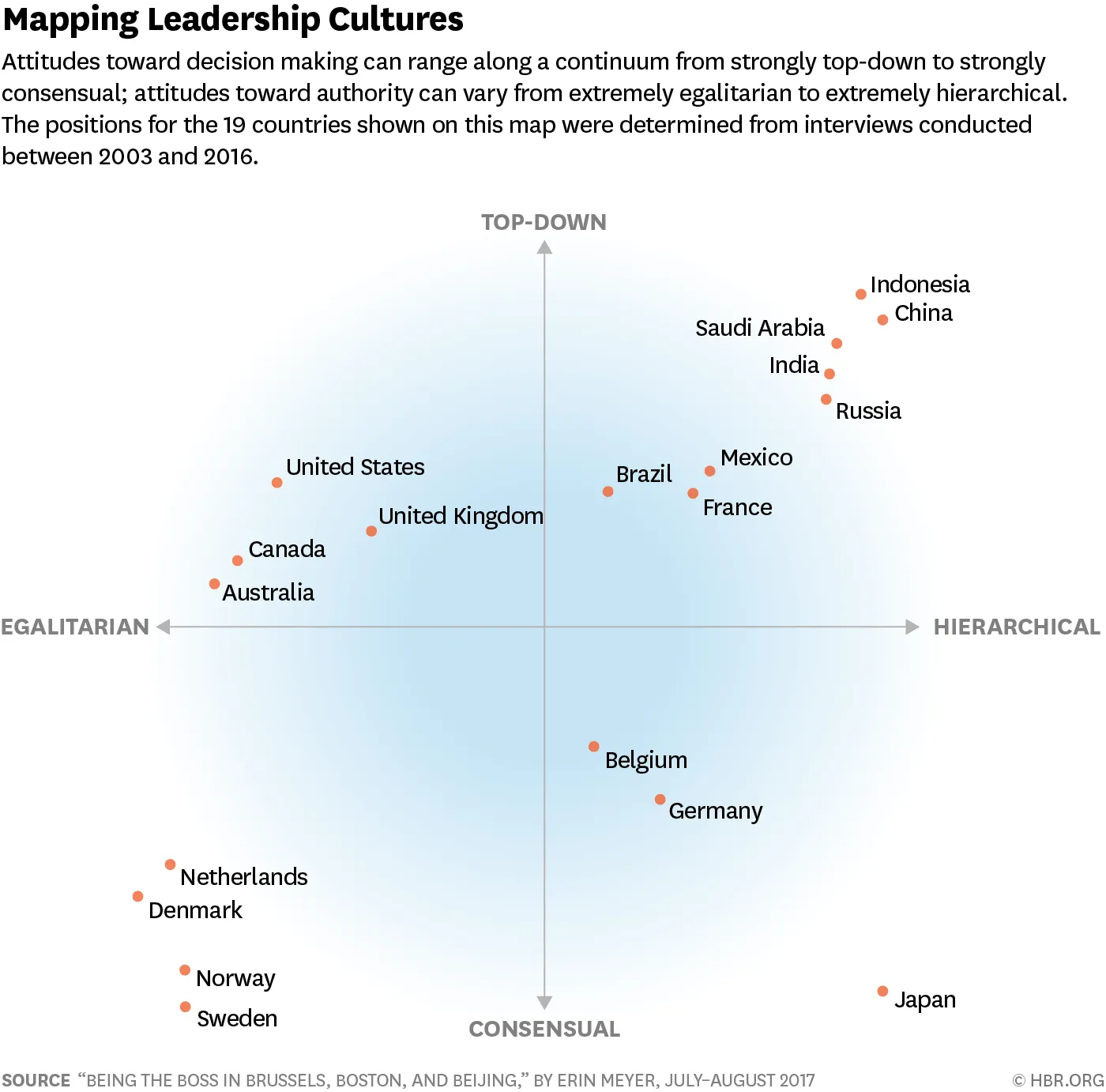
<p>The UK falls quite middle-of-the road on both — halfway between egalitarian and hierarchical leadership styles and halfway between consensual and top-down decision-making. The US, meanwhile, falls more egalitarian in leadership style, <strong>and yet</strong> more top-down in decision-making.</p>

<p>This really stood out to me, and I was curious to figure out a bit more about what it meant in practice. I found <a href="https://hbr.org/2017/07/being-the-boss-in-brussels-boston-and-beijing">this great HBR article</a> which laid world cultures out on a 2x2 (I’m a sucker for a 2x2):</p>

<p><img src="/assets/images/1_bk5nieJ6GkWKFf88vn7JKg.webp" alt="Mapping leadership cultures from to lead across cultures…" /></p>

<p>As with most of the analysis, the UK and US both fall in the same approximate area of the chart when compared to the rest of the world, but it’s in those subtle differences that we find the jarring miscommunications and opportunities to misunderstand one another. Based on a deeper dive into the HBR analysis, we can see that:</p>

<ul>
  <li>Brits should expect their American colleagues to speak up loudly <strong>before a decision is made</strong> no matter what your relative positions are (egalitarian) and yet to <strong>align quickly</strong> and support whatever decision the boss makes even if it isn’t what they’d have chosen (top-down). Decisions can also be seen as a little less permanent and more subject to later revision in the US than the UK and British bosses should get used to their American colleagues expecting strong, clear statements of “your decision” even if you have to revise it later.</li>
  <li>Americans bosses should expect that they may have to <strong>ask Brits explicitly to speak up</strong> with any objections and remind them that they intend to take a decision <strong>to which the whole team commits</strong> (it is perhaps unsurprising that one of the most useful books we have come across as a trans-Atlantic team is <a href="https://www.tablegroup.com/books/dysfunctions">Patrick Lencioni’s Five Dysfunctions of a Team</a> which covers <strong>“conflict and commit”</strong> in great detail)</li>
</ul>

<h1 id="summary">Summary</h1>

<p>Based on all this, here’s your brief checklist for immaculate US-UK business relationships:</p>

<p><strong>Brits:</strong></p>

<ul>
  <li>Focus on execution and doing what you said you will — especially in those critical first few interactions</li>
  <li>Speak and write more clearly than you are used to and say exactly what you mean</li>
  <li>No matter what your relative status, speak up clearly before decisions are made and say that you will commit to the decision once made</li>
</ul>

<p><strong>Americans:</strong></p>

<ul>
  <li>Be prepared for it to take longer to get the obvious signals that your colleague likes and trusts you than you are used to and take any opportunity you can to get to know your British counterparts better</li>
  <li>Expect subtleties in communication style and ask for plain / blunt speaking if you aren’t sure what something means</li>
  <li>Explicitly ask for any conflict while discussing forthcoming decisions — especially if you are working with people who may feel that the hierarchy of the company means they shouldn’t speak up at this point</li>
</ul>

<h1 id="things-i-havent-covered-here">Things I haven’t covered here</h1>

<p>Erin talked a great deal about the ways that not all individuals in a culture think or behave the same way, and the ways that outliers can be perceived both in their own cultures and abroad. I haven’t dug into any of that though it’s clearly worth bearing in mind as you apply all of this in your own life.</p>

<h1 id="your-experiences">Your experiences</h1>

<p>What have you noticed when doing business on both sides of the Atlantic? What haven’t I covered here? I’d love to hear others’ thoughts and experiences.</p>]]></content><author><name></name></author><category term="culture" /><summary type="html"><![CDATA[This post started as an internal message to share with our team some interesting insights and things I’d learned from a talk I attended last week, but as I wrote it, I thought that it might be interesting to a wider audience.]]></summary></entry><entry><title type="html">How I met Richard Denny and the ways it changed my life</title><link href="https://willcritchlow.com/richard-denny/" rel="alternate" type="text/html" title="How I met Richard Denny and the ways it changed my life" /><published>2016-06-22T16:17:54+00:00</published><updated>2016-06-22T16:17:54+00:00</updated><id>https://willcritchlow.com/richard-denny</id><content type="html" xml:base="https://willcritchlow.com/richard-denny/"><![CDATA[<p>We were 25 and we had decided to quit our jobs.</p>

<p>As I write this in 2016, Duncan and I have known each other for a quarter century. In early 2005, it was a mere 15 years, but it was still probably ten years since we knew we’d one day run a company together. In the 90s we fulfilled cliches old and new by running toy businesses (the cricket coaching camp being especially memorable) and building stuff on the internet just as it was taking off.</p>

<p>In the ten years that followed before we launched the company that became Distilled, we’d hire and fire for the first time (though given that the former came with practically no pay, the latter may well have been a blessing), we’d nearly get sued over our company name, we’d delete our only server and have to rebuild it from scratch.</p>

<p>OK — that last one was me (deleting) and <a href="https://twitter.com/graemecoates">Graeme</a> (rebuilding all night). Thanks G!</p>

<p>Through all of it though, we’d probably sold about £1,000 of <em>stuff</em> (mainly websites). For our crazy plan to work, to let us do it full-time and quit our jobs, and to pay our rent, we had to be able to sell <strong>tens</strong> of thousands of pounds worth in the first year alone. For it to really work, we’d have to sell at least <strong>100x</strong> as much as we had ever sold, and we’d have to do it every year from here on out.</p>

<p>There was a “business plan” (well, an Excel model) that is unfortunately lost to the sands of time. It modelled out how much we might be able to sell if we made as many cold calls as we could, converted an assumed number to meetings, sold small websites to some further assumed percentage, and built them as fast as we could.</p>

<p><strong>We couldn’t even make it work on paper. The Excel model went bust.</strong></p>

<p>We decided to do it anyway (see: 25, renting, no kids…).</p>

<p>So now it was a month or so before the big day. Our company was getting incorporated. We’d quit our jobs. It was all getting a little real. We went away on one last holiday — just the four of us (Duncan and I, and our girlfriends — who we would marry a few years later). We figured this was our last chance to go away together before throwing ourselves into startup life.</p>

<p>We had each saved up a few thousand pounds to see us through for as long as possible (see: 25, renting, no kids…!) and our future wives luckily still had real jobs. So we looked around for a fairly cheap option for March sun and settled on the beautiful Greek island of Kefalonia:</p>

<p><img src="/assets/images/1_kT-2IgfuQriWN1s4Cvnn2A.webp" alt="captionless image" />
<img src="/assets/images/1_XpDdBLY-oT84uAPDeKYKdA.webp" alt="We didn’t have the company name Distilled yet. We were still wandd.net. I still have those sunglasses. And those shorts." />
<img src="/assets/images/1_kB4WOIo3dD8XWDdtth0H8Q.webp" alt="captionless image" />
<img src="/assets/images/1_aRZPFALFlVFyup_e3y8N-A.webp" alt="captionless image" /></p>

<p>So that’s how we ended up in Gatwick airport — on our way on holiday — thinking about the fact that our futures rested on our sales abilities, and contemplating the fact that we really had no idea what we were doing (see Twilio’s <a href="http://www.slideshare.net/twilio/scaling-company-values-twilio-techweek-2012/19-Draw_the_Owl_Theres_no/">“draw the owl”</a> — and <a href="http://www.slideshare.net/twilio/scaling-company-values-twilio-techweek-2012/20-Draw_the_Owl_Theres_no">subsequent slide</a>).</p>

<h2 id="the-bright-green-book">The bright green book</h2>

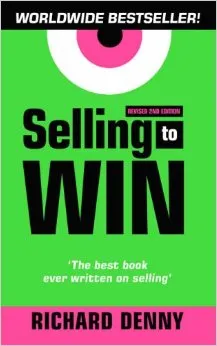
<p>We wandered into the airport bookshop (back in the pre-kindle days, of course) and started browsing the business books. We thought that we would maybe pick up a book on sales and it might be useful in getting us started. The only problem was that we didn’t know what we were looking for. Luckily one stood out because it was <strong>bright green</strong>. Because we had no better way of choosing we went for that one:</p>

<p><img src="/assets/images/1_aW61XlbCY42dOXfG7xM8HQ.webp" alt="Selling to Win" /></p>

<p>These days you can buy <em>Selling to Win</em> on the Kindle (<a href="https://www.amazon.com/Selling-Win-Richard-Denny-ebook/dp/B00AZJZ5KG/">Amazon US</a>, <a href="https://www.amazon.co.uk/Selling-Win-Richard-Denny-ebook/dp/B00AZJZ5KG/">Amazon UK</a>) — though the cover is no longer green even on the paperback.</p>

<h2 id="what-we-learned-from-selling-to-win">What we learned from <em>Selling to Win</em></h2>

<p>We both read <em>Selling to Win</em> in a few hours at the start of the holiday and it was a great introduction to the art and science of selling. Even though it’s over a decade since I read it, I remember one of the specific stories really well. Here it is as I remember it in my own words:</p>

<blockquote>
  <p>You’re trying to sell a complex office phone system. The classic way of thinking is to get the system out and start by showing the prospect all the amazing things it can do. If you’re smart about it, you’re going to make sure you focus on benefits rather than features. <strong>But there’s a better way</strong>. Leave the system in the car and ask some questions. Ask the prospect what challenges they’re facing, and what they really wish their phone system could do. <strong>Then</strong> get your system out and show them how it does exactly the things they want.</p>
</blockquote>

<p>But we still had a problem.</p>

<p>We had picked this book based <em>entirely</em> on its bright green cover. We had no idea if it was legit. We had no idea if we’d learned anything useful.</p>

<p>Somewhere around this point I had a brainwave:</p>

<blockquote>
  <p>What if we tried it out on Richard Denny himself? If he doesn’t buy from us when we use his own technique, then we can’t trust anything he says.</p>
</blockquote>

<p>Now. I was mainly joking. I thought that every clown that read a book on sales must turn around and try to sell their stuff to the author. It was some time later that we learned that wasn’t true; apparently no-one had ever tried it on him.</p>

<h2 id="dennys-process">Denny’s process</h2>

<p>It started with a letter. The letter simply asked him to take our call. The goal was just to have name recognition when you called.</p>

<p>I called. I probably got through to <a href="https://www.linkedin.com/in/judith-harker-6670885">Judith</a> but I don’t remember now.</p>

<p>I followed the plan and just asked for a meeting while giving up very little background.</p>

<p>The next week, Duncan and I caught a train at about 6am to get out to Moreton-in-Marsh for a morning meeting.</p>

<p>And we finally met Richard:</p>

<p><img src="/assets/images/1_lqAgVyn-4udcus6ji7VTFA.webp" alt="Richard Denny" /></p>

<p>I suspect it was simply the fact that we’d used his own book against him in some kind of Judo move, but somehow, trapped by our inescapable logic, we sold some few hundred pounds-worth of work to him. I don’t now even recall exactly what that first piece of work was.</p>

<p>Over the subsequent years, we would go on to completely rebuild his website for him, create and promote ebooks, and advise him on all kinds of digital things.</p>

<p>More important than the revenue, though, was the advice.</p>

<h2 id="mentoring-and-growth">Mentoring and growth</h2>

<p>Over the following years, Richard would regularly let us know when he was in London, and we’d meet at the Institute of Directors.</p>

<p>He acted like a mentor, like an ad-hoc board member holding us to account for our promises and our plans, and like an advisor. It turns out that he hadn’t only written brightly-coloured sales books, but had also written about teamwork, motivation, leadership and more. Despite his broad experience, my abiding memory is that <em>everything</em> came back to sales. Specifically, I remember a few “Denny-isms”:</p>

<ul>
  <li>Your order of priorities are: collecting cash, sending out invoices, making your sales calls, then everything else. Don’t forget to bill. Don’t skimp on the calls.</li>
  <li>Sales fixes everything</li>
  <li>Call early in the morning and late at night — that’s when the business owner answers their own phone</li>
</ul>

<p>You can see his influence in the (literally) hundreds of letters we used to hand-address every week (because people are more likely to open their own mail if it’s hand-addressed). In the years we both spent getting up at 5.30am every week to go to BNI breakfast networking meetings. In the thousands of hours I spent walking door to door pitching our services.</p>

<p>Ironically, you can probably also see it in the way we dedicated much of the following decade to escaping outbound sales calls! (You can <a href="https://willcritchlow.com/things-i-wish-id-known/">read more about that here</a>). I still see it as the fundamentals though — like learning footwork in basketball or scales in music.</p>

<p>This has turned out to be one of the less-actionable posts I’ve written, but if I can extract some lessons that might be useful to others, they’d be:</p>

<ul>
  <li>Everyone should learn sales — it’s the fundamentals of business</li>
  <li>Get a copy of the book (<a href="https://www.amazon.com/Selling-Win-Richard-Denny-ebook/dp/B00AZJZ5KG/">Amazon US</a>, <a href="https://www.amazon.co.uk/Selling-Win-Richard-Denny-ebook/dp/B00AZJZ5KG/">Amazon UK</a>)</li>
  <li>Sometimes no-one has done the ballsy but obvious thing</li>
  <li><a href="https://www.distilled.net/manifesto/">#hustle</a></li>
</ul>

<p>[In the course of writing this post, I also came back across a bunch of dumb things we did that are quite similar to “let’s write a letter to this big-time author and try to sell him something”. 6 years before we read <em>Selling to Win</em>, in 1999, <a href="https://twitter.com/tomcritchlow">Tom</a>, Duncan and I tried cold outreach to the marketing teams at Nike, Oakley and others to sell them some kind of advertising — the details are thankfully lost in the mists of time — so I guess another lesson is to <strong>persevere stupidly</strong>!]</p>

<h2 id="thank-you-richard">Thank you Richard</h2>

<p>To wrap up, I think Richard deserves a lot of credit for the 2006–2009 era of our business in particular — and without that foundation, not only would we not have built what we have over the last decade, but we wouldn’t have the fundamentals he taught us.</p>

<blockquote>
  <p>Thank you for believing in us. Thank you for seeing something in us that we didn’t even see in ourselves back then. Thank you for the foundation you helped us build.</p>
</blockquote>]]></content><author><name></name></author><category term="lessons" /><summary type="html"><![CDATA[We were 25 and we had decided to quit our jobs.]]></summary></entry><entry><title type="html">Things I wish I’d known</title><link href="https://willcritchlow.com/things-i-wish-id-known/" rel="alternate" type="text/html" title="Things I wish I’d known" /><published>2016-06-16T16:17:54+00:00</published><updated>2016-06-16T16:17:54+00:00</updated><id>https://willcritchlow.com/things-i-wish-id-known</id><content type="html" xml:base="https://willcritchlow.com/things-i-wish-id-known/"><![CDATA[<p><img src="/assets/images/1_DEzZ8Ejra4uviDKXhryrfw.webp" alt="L-R (including background): Gordon Meadows, me aged ~17 [#6], Jonny Harker, Steve Ferguson [#10], can’t remember [#11], Adrian Bennett, mum(!), Tom Critchlow (table official)" /></p>

<p>I can’t believe it’s been five years.</p>

<p>Five years ago — a lifetime in entrepreneur-land — I was invited back to my <a href="http://www.staidans.co.uk/">old school</a> to give a talk to a bunch of 16 and 17 year olds. At this point I was a little over five years into the <a href="https://www.distilled.net">Distilled</a> journey.</p>

<p>The topic I ended up choosing was “<a href="http://www.slideshare.net/willcritchlow/things-i-wish-id-known-8414438">things I wish I had known</a>” when I was at school.</p>

<p>I was looking back through old presentations recently and was surprised to realise that I’d never written about it — and I thought it was interesting to look back at it through the lens of another five years.</p>

<p>Here’s the presentation:</p>

<div style="position: relative; width: 100%; padding-bottom: 56.25%; height: 0; overflow: hidden;">
  <iframe src="https://www.slideshare.net/slideshow/embed_code/key/Cq0tq2WNX4EhRb?startSlide=1" width="597" height="486" frameborder="0" marginwidth="0" marginheight="0" scrolling="no" style="border:1px solid #CCC; border-width:1px; margin-bottom:5px;max-width: 100%;" allowfullscreen=""></iframe>
</div>

<h2 id="context">Context</h2>

<p>It starts with an introduction about my co-founder (<a href="https://www.distilled.net/about/people/duncan-morris/">Duncan</a>) and my brother (<a href="https://twitter.com/tomcritchlow">Tom</a>) whose personal and professional lives are intertwined with mine — and who both went to the same school. It teases with some photos from our early <a href="https://www.distilled.net/events/">conferences</a> and then goes back to some of our earliest web-based entrepreneurial adventures:</p>

<ol>
  <li>The time when we picked a company name already in use by a company just down the road in Leeds and it got all legal (in our defence, we were 16 or 17, and it was before Google existed!)</li>
  <li>The time when we built a business plan / model in Excel to quit our jobs and start selling website design and build services. We couldn’t even make the mechanics of cold-calling / selling websites door-to-door work on paper, but we said “screw it” and went ahead anyway. We made £36k in revenue that first year — roughly a salary between us</li>
</ol>

<h2 id="into-the-lessons">Into the lessons</h2>

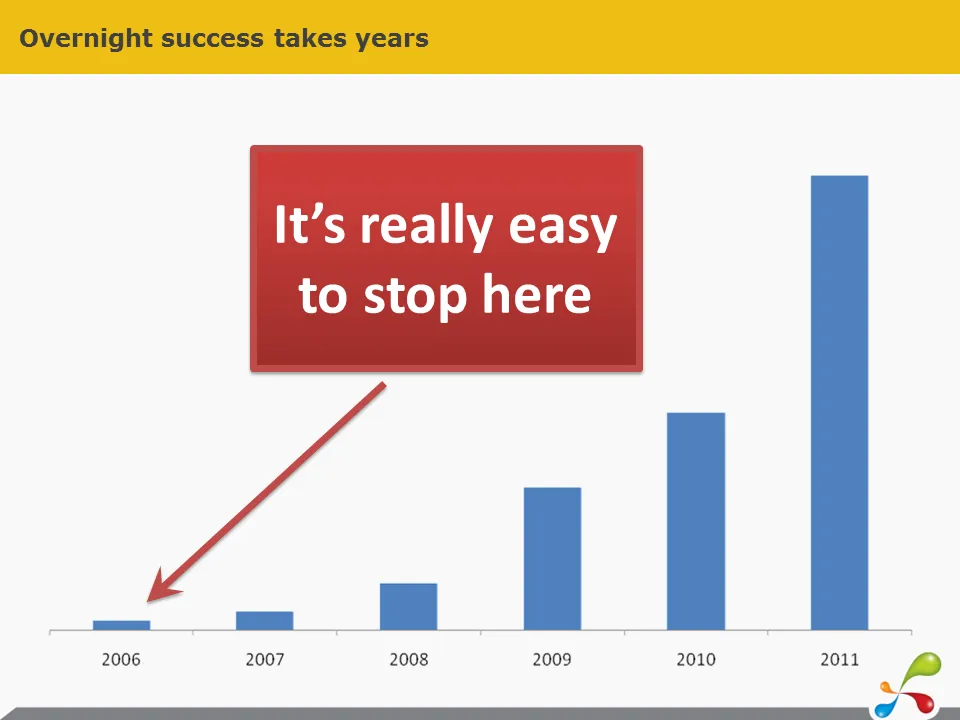
<p><strong>Overnight success takes years</strong></p>

<p>We’d grown past £1m in annual revenue by this time, and so I could present a <a href="http://www.slideshare.net/willcritchlow/things-i-wish-id-known-8414438/7">nice chart</a> showing how long it took, and how tiny those first few years were:</p>

<p><img src="/assets/images/1_BIcslnCHsytDDLN8G587Nw.webp" alt="Overnight success takes years" /></p>

<p>We came of age during the dotcom bubble and bust, and so had some crazily unrealistic expectations of what business growth could be like when we were dreaming about starting our company in 2000 / 2001. I feel like those expectations were dashed in the bust, stomped into the ground by our first couple of years toiling, but that ultimately that made the growth that we had to work for all the more sweet.</p>

<p><strong>Stop worrying what others think</strong></p>

<p>We were not the cool kids at school. We were kind of almost tolerated by the cool kids because of basketball, but were very definitely on the geeky fringes. Geek stuff seems to have turned out OK for us though.</p>

<p>It’s funny looking back — I don’t know if it’s changed now — I remember feeling as a teenager that business wasn’t the place for academic thought or geeky technology. This might have been a uniquely British perspective (Bill Gates was at the helm of a Microsoft at the pinnacle of its influence after all) but everything about business at our northern state comprehensive in 1996 was about the anti-academic market trader who left school at 16 and sold his (always his) way to the top.</p>

<p>Anyway, hopefully Page, Brin, Zuck, Mayer etc. have changed the narrative — but regardless, I wanted to make the point that the dynamics that exist in high school aren’t lifelong.</p>

<p><strong>Hang out with people who are smarter than you</strong></p>

<p>For me, this was a lesson I learned at university (I recently came across <a href="https://medium.com/@chrisdeerin/why-cant-hobbits-be-wizards-too-4bdae194036">this brilliant post</a> about the experience of being at a great university). It’s actually a continuation of the previous point though — which is that a) you get to choose who you hang out with once you’re outside the constraints of school and b) that means you can choose what you spend your time thinking about and your days talking about.</p>

<p><strong>Business friends rock</strong></p>

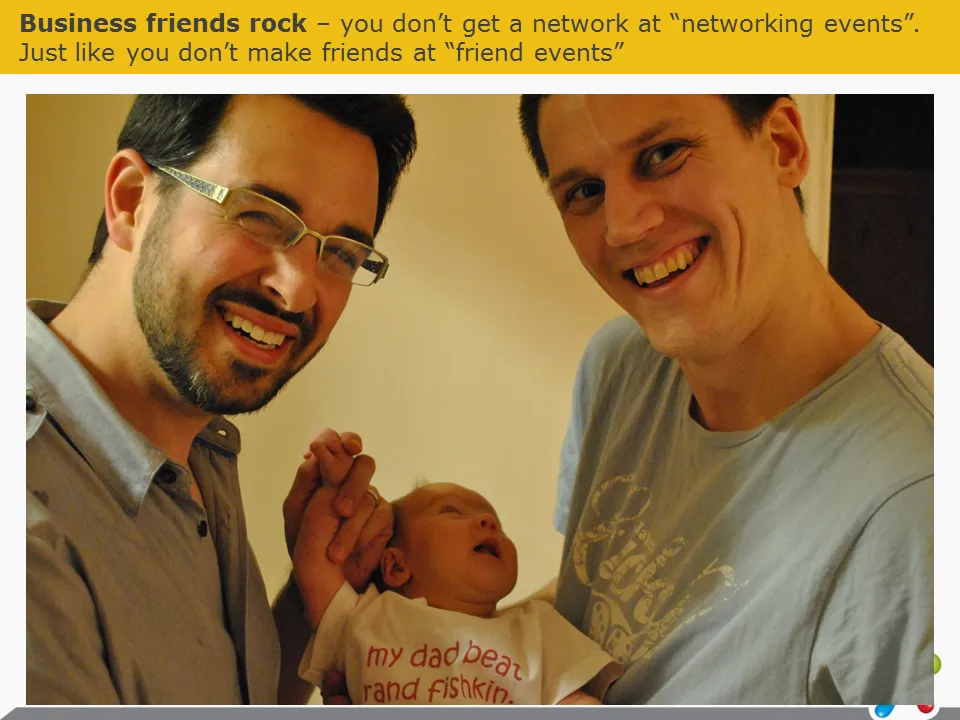
<p>In the early days of our company, we had no network. We were 25, had no industry experience, and knew basically no-one. I knew we needed to change that, but the early things I did to build a network (largely <em>going to networking events</em>) weren’t effective. What did work was hanging out in places full of smart people who were interested in the same things I was interested in and genuinely getting to know them.</p>

<p>I love looking back at the image I used to illustrate this point:</p>

<p><img src="/assets/images/1_nxxuIUWGBLFEaP72dXATcw.webp" alt="Business friends rock" /></p>

<p>That’s me, my daughter Rachel (about 6 months old at the time) and <a href="https://twitter.com/randfish">Rand</a>. Separated by almost 5,000 miles and 8 timezones, Rand remains someone I look up to, someone I learn from, and someone I can turn to about anything business or personal.</p>

<p>We initially met because I hung out in the early <a href="https://moz.com">moz</a> community (my <a href="https://moz.com/community/users/21379">6,000+ mozpoints</a> would have me in the <a href="https://moz.com/community/users">top 5 community members</a> if the associate deal we later did hadn’t removed me from the running). The friendship grew the same way my non-business friendships grew — over conversations, broken bread, and shared ups and downs.</p>

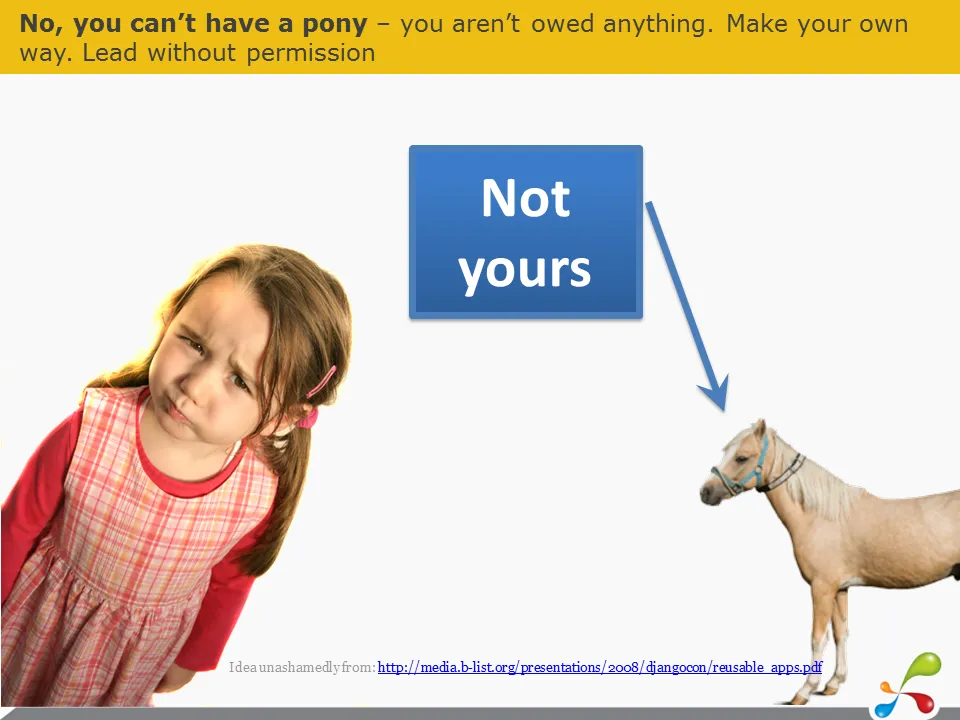
<p><strong>No, you can’t have a pony</strong></p>

<p><img src="/assets/images/1_TmPJj_IS8EGeUCtOHsmf4g.webp" alt="No you can’t have a pony" /></p>

<p>It felt like there was a lot less <a href="http://www.economist.com/news/business/21660110-businesses-should-beware-dubious-generalisations-about-younger-workers-myths-about">nonsense being spouted about millennials</a> back in 2011 than there is today, but at this point, I was trying to fast-track the audience to a realisation it took me a couple of years in the workplace to reach.</p>

<p>I chafed against wanting more responsibility and more ownership throughout the 2.5 years I worked for other people after university. But at the same time, I wasn’t the greatest employee. I needed to prove it in my current job <strong>and</strong> take accountability for doing the things I wanted to do next. It wasn’t until the first day working for myself that I really got it — that I really understood that you don’t need permission to lead.</p>

<p><strong>Curiosity is your best asset</strong></p>

<p>One of the most enduring lessons from my entire school career (probably second only to the time Gordon Meadows told me he’d cut me from the basketball team if I was ever thrown out of a maths lesson again) was the quote from Mr. Wilson who taught design, technology and electronics:</p>

<blockquote>
  <p>Always ask yourself ‘how does that work?’</p>
</blockquote>

<p>He encouraged us to ask it about office chairs that go up and down when you press a lever, about what went on when you requested money at an ATM, and about many other things. It’s really stuck with me — and it leads to the (most likely mistaken) belief that there is nothing you can’t understand. And the brilliant thing when it comes to computers — and specifically to software — is that if you can understand it you can build it.</p>

<p>You don’t need to want to become a developer or an engineer to get value from <a href="https://www.distilled.net/blog/seo/the-modern-seos-toolkit-my-rant-about-learning-to-code/">learning how to build things</a>.</p>

<p><strong>Don’t listen to careers advisors</strong></p>

<p>I phrased this narrowly at the time — all about getting hired — but the real lesson is that:</p>

<ul>
  <li>You don’t have to be an actuary if you’re good at mathematics</li>
  <li>Many of the best jobs aren’t advertised</li>
  <li>Many of the biggest opportunities come without applying for a job</li>
  <li>What you’ve done is more important than how you present a CV / resume</li>
</ul>

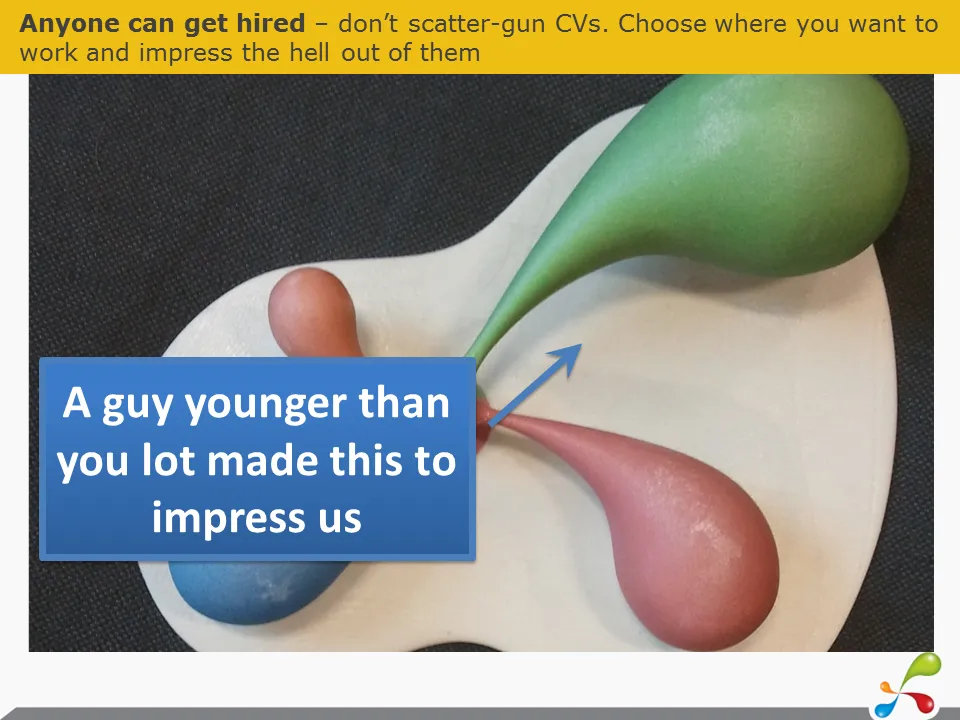
<p><a href="https://twitter.com/edfryed">Ed Fry</a> can tell the story of how, aged 16, he 3D-printed our logo to impress us and the incredible things he’s gone on to do since then:</p>

<p><img src="/assets/images/1_KguAQe-CuqylOpe5ehTC7g.webp" alt="captionless image" /></p>

<p><strong>Read these books</strong></p>

<ol>
  <li>Good to Great <a href="https://www.amazon.co.uk/Good-Great-Jim-Collins/dp/0712676090">Amazon UK</a>, <a href="https://www.amazon.com/Good-Great-Some-Companies-Others-ebook/dp/B0058DRUV6">Amazon US</a></li>
  <li>Getting Things Done <a href="https://www.amazon.co.uk/dp/B00SHL3V8M/">Amazon UK</a>, <a href="https://www.amazon.com/Getting-Things-Done-Stress-Free-Productivity/dp/0142000280">Amazon US</a></li>
  <li>The E Myth <a href="https://www.amazon.co.uk/dp/B000RO9VJK/">Amazon UK</a>, <a href="https://www.amazon.com/Myth-Revisited-Small-Businesses-About/dp/0887307280">Amazon US</a></li>
</ol>

<p><strong>Get past cold calls as fast as you can</strong></p>

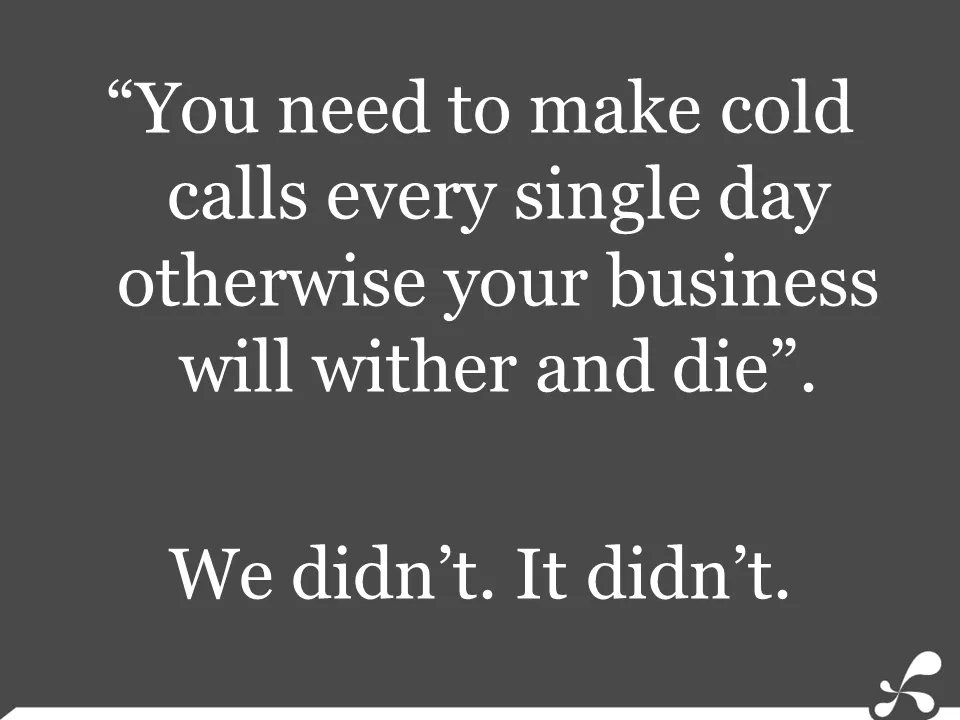
<p>The story of our journey to learn sales is a tale for another day (TL;DR — Selling to Win [<a href="https://www.amazon.co.uk/Selling-Win-Richard-Denny-ebook/dp/B00AZJZ5KG/">Amazon UK</a>, <a href="https://www.amazon.com/Selling-Win-Richard-Denny-ebook/dp/B00AZJZ5KG/">Amazon US</a>] and its author <a href="https://www.koganpage.com/authors/richard-denny">Richard Denny</a>). But the one thing that we had to break free of was the insistence that cold outbound approaches were the <em>only</em> way we could grow our business:</p>

<p><img src="/assets/images/1_iqtgYCoCrAq2qHas2Jp0xw.webp" alt="Get past cold calls" /></p>

<p>In that first 12–24 months we sent a lot of letters, made a lot of cold calls, and knocked on a lot of doors (literally). Our business really took off when we started eating our own dogfood, blogging, and growing our presence and reputation.</p>

<p><strong>Once you leave college it’s not cheating any more</strong></p>

<p>There’s a backstory here about the college part that I’ll tell you over a beer one day, but the critical part is the “unfair” advantages part. There are plenty of unethical and immoral temptations that will come your way in the world of business — and it’s worth remembering that a reputation is more easily broken than built. BUT there are so many things that are inappropriate at school (like looking up the answers, doing mutually-beneficial deals, and generally standing on the shoulders of giants) that are to be encouraged once you are out there in the real world. There are no marks for effort, nor for showing your working once you’re being judged on results.</p>

<p><img src="/assets/images/1_UHpzKLPrixcrSTMl_KWsPQ.webp" alt="Give yourself unfair advantages" /></p>

<p><strong>From here on out, do something you love</strong></p>

<p><img src="/assets/images/1_ZvKs2jfIzzPROsE__C9yNw.webp" alt="This one’s self-explanatory I think" /></p>

<p><strong>No-one knows what they’re doing</strong></p>

<blockquote>
  <p>Never compare your inside to someone else’s outside</p>
</blockquote>

<p>I don’t recall where I first saw this quote (which is now attributed to so many people), but it’s similar to the company-level version in <a href="https://bothsidesofthetable.com/start-ups-are-all-naked-in-the-mirror-bd6ca2e812a7">this post from Mark Suster</a>.</p>

<p>Not only have I found it useful in managing my own psychology, but I’ve also found it useful in thinking about whether I’m “ready” for certain milestones in my life. The short version is that there are so many things you’re unlikely to feel ready for in advance (a non-exhaustive list of things I didn’t feel ready to do: hiring someone, getting married, buying a house, having kids). I vividly remember the desire to call a grown-up to get “permission” before the first of those — hiring our first employee.</p>

<h2 id="what-have-i-learned-in-the-subsequent-five-years">What have I learned in the subsequent five years?</h2>

<p>I set out to write this post as a quick task to host that old deck. It’s already become much longer than I anticipated it would. So I’m not going to illustrate all my newer lessons right now — but here are the main ones that spring to mind now:</p>

<p><strong>You can’t overstate the importance of alignment</strong></p>

<p>You don’t always have to agree on everything with the people you work with (in fact, you should vigorously dig out conflict — see <em>five dysfunctions of a team</em> below). Five years ago, the team was so much smaller, and so much newer, and we hadn’t really experienced misalignment. Some of it is obvious (people who actively have a different vision or who detract from your own will be incredibly hard to work with), but some is more pernicious — in particular, it takes a lot of experience to realise how much it saps energy to be around those who won’t <strong>commit</strong> to decisions and directions, and who either continuously revisit old debates or engage in political games to backchannel their displeasure.</p>

<p>Do everything you can to avoid ending up in those situations, and to get out of them as fast as possible when they accidentally arise.</p>

<p><strong>It’s really hard to get honest and helpful feedback</strong></p>

<p>We believe that:</p>

<blockquote>
  <p>communication solves all problems [<a href="https://www.distilled.net/manifesto/">Distilled manifesto</a>]</p>
</blockquote>

<p>One of the ways this plays out is in feedback — and the critical importance of seeking out the feedback you need to improve your work and your capabilities as well as actively seeking out those people who will tell it to you straight. This latter point is especially important as a company grows and the perception of “management” or “leadership” can build artificial walls preventing people from sharing honest opinions. (<a href="https://www.distilled.net/resources/feedback-building-great-teams/">Practical tips and advice</a> from one of our experienced consultants here).</p>

<p>Getting good at giving and receiving feedback has been most evident internally in our ability to craft public presentations. I recently looked up the feedback we received at our <a href="https://blogs.msdn.microsoft.com/searchblog/2009/10/20/seomoz-pro-seo-training-london-proseo/">first conference</a> (which felt to us to be a real step up in quality from similar events we’d spoken at before). Across all sessions back in 2009, 13% of all session ratings were “average” or “poor” (45% were “excellent”!). At our most recent <a href="https://www.distilled.net/resources/everything-you-missed-at-searchlove-boston-2016/">Boston conference</a>, across all sessions, <strong>2.2%</strong> of all session ratings were “average” or “poor”.</p>

<p><strong>You’re going to be most proud of things done by other people</strong></p>

<p>I wrote a <a href="https://willcritchlow.com/the-things-of-which-im-most-proud/">whole post about this</a> — including a whole bunch of reasons why you should <a href="https://www.distilled.net/jobs/">come and work at Distilled</a>.</p>

<p>It’s emphasised and highlighted by this amazing post that ex-Distiller <a href="https://twitter.com/dohertyjf">John Doherty</a> wrote recently about Distilled entitled <a href="http://www.johnfdoherty.com/best-entrepreneurship-incubator/">the greatest entrepreneurship incubator you’ve never heard of</a>:</p>

<blockquote>
  <p>Thank you Distilled and those there who took a chance on me. I am forever grateful. — <a href="http://www.johnfdoherty.com/best-entrepreneurship-incubator/">John Doherty</a></p>
</blockquote>

<p>Us too John. Us too.</p>

<p>I’m proud of those who’ve left Distilled to great things. I’m incredibly proud of those who’ve worked their way up at Distilled — from analyst to VP, from EA to head of department etc. The list goes on. And I’m already proud of the next generation — can’t wait to see what <strong>they</strong> do over the next 5 years.</p>

<p><strong>There’s some more books you should read</strong></p>

<ul>
  <li>High output management <a href="https://www.amazon.co.uk/High-Output-Management-Andrew-Grove/dp/0679762884/">Amazon UK</a>, <a href="https://www.amazon.com/High-Output-Management-Andrew-Grove/dp/0679762884/">Amazon US</a></li>
  <li>The hard thing about hard things <a href="https://www.amazon.co.uk/Hard-Thing-About-Things-Building-ebook/dp/B00DQ845EA/">Amazon UK</a>, <a href="https://www.amazon.com/Hard-Thing-About-Things-Building/dp/0062273205/">Amazon US</a></li>
  <li>Five dysfunctions of a team (and indeed everything else by Patrick Lencioni) <a href="https://www.amazon.co.uk/Five-Dysfunctions-Team-Leadership-Lencioni/dp/0787960756/">Amazon UK</a>, <a href="https://www.amazon.com/Five-Dysfunctions-Team-Leadership-Fable/dp/0787960756/">Amazon US</a></li>
</ul>

<p><strong>…and tons more</strong></p>

<p>It’s really hard to remember what things were like in even the relatively recent past. I was looking back through old emails recently to find some significant internal memos and I found a whole load of documentation of some financial decisions we had to make in early 2012 when we were still paying for opening an office up in NYC, had a big corporation tax bill to pay in the UK, needed to pay a huge deposit on new office space in London etc. It must have been a stressful time. I don’t remember it particularly well. That’s part of the reason that I try to write these things from time to time — they’re snapshots of a state of mind.</p>

<p>I’ve also left out all of the personal and family lessons (which are legion — my daughter was only 1 when I gave that last talk and now she’s 6, going into year 2 at school, and my son starts school in September). We’ll save those personal stories for another day.</p>]]></content><author><name></name></author><category term="lessons" /><summary type="html"><![CDATA[]]></summary></entry><entry><title type="html">The things of which I’m most proud</title><link href="https://willcritchlow.com/the-things-of-which-im-most-proud/" rel="alternate" type="text/html" title="The things of which I’m most proud" /><published>2016-02-08T16:17:54+00:00</published><updated>2016-02-08T16:17:54+00:00</updated><id>https://willcritchlow.com/the-things-of-which-im-most-proud</id><content type="html" xml:base="https://willcritchlow.com/the-things-of-which-im-most-proud/"><![CDATA[<p><img src="/assets/images/1_XunVauHavbm_5bQ1ZNRJdg.webp" alt="Some of these still give me chills (from our services page)" /></p>

<p>Before speaking at our recent conference, the MC (<a href="https://www.facebook.com/Distilled/photos/a.10153762780508885.1073741837.7370493884/10153762780633885/?type=3&amp;theater=">Hannah</a>) asked me to answer some questions to make the intro more personal. One of the questions was:</p>

<blockquote>
  <p>What are you most proud of in your professional career?</p>
</blockquote>

<p>It’s a great question; it challenges you to come up with something that’s somehow hard, exciting, and worthwhile.</p>

<p>I thought for a long time.</p>

<p>In the end, my answer was:</p>

<blockquote>
  <p>I’m most proud of the fact that all of Distilled’s best work was done by other people.</p>
</blockquote>

<p>And it’s true — the team I’ve had the privilege to hire, grow, and work with is easily my biggest professional achievement.</p>

<p>I’ve given some decent presentations, but other people have scored higher. I’ve done some pretty cool client work, but other people have had a bigger impact. I’ve been excited about creative content, and luckily other people have been good at actually producing it.</p>

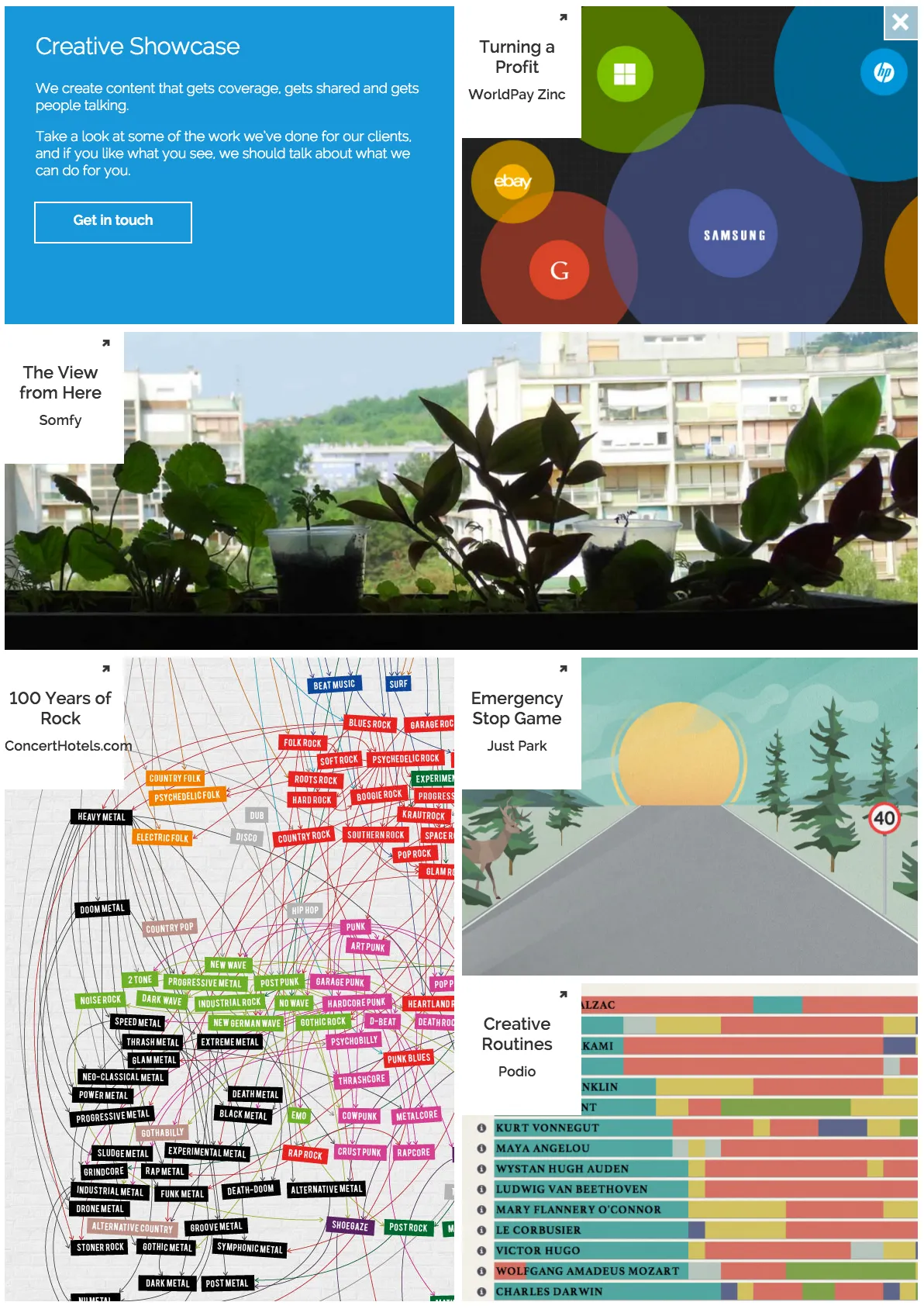
<p>Creative content is a very concrete example that we can <a href="https://www.distilled.net/services/creative/">easily show off</a>. For the avoidance of doubt, I didn’t design or build any of these:</p>

<p><img src="/assets/images/1_ezXLiB6zT7F84Zg4LwyZtQ.webp" alt="Just a part of our creative showcase page" /></p>

<p>If you had told Duncan and me ten years ago that our company would be responsible for getting our clients coverage in all these places we would have looked at you like you were crazy. If you had said we’d do it with beautifully-designed campaigns and creative content, we’d have <em>known</em> you were crazy. You see, we hadn’t discovered the magic of hiring people at that point — specifically the magic of hiring people who are better than you.</p>

<p><img src="/assets/images/1_ZDU5WTGKGo4x7knWXcGfNw.webp" alt="This is only some of the places we have achieved coverage for our clients" /></p>

<h2 id="its-not-just-creative-content-though">It’s not just creative content though</h2>

<p>It’s the top-rated conference talks I didn’t give. But the team did.</p>

<p>It’s the resources that are referenced by <em>everyone</em> around the industry that I didn’t write. But the team did.</p>

<p>It’s the major retailer that generates millions in sales on advice I didn’t give. But the team did.</p>

<p>Weirdly, it’s also the alumni who got their jobs as a result of the reputation they built at Distilled.</p>

<h2 id="im-proud-of-our-alumni">I’m proud of our alumni</h2>

<p>I suspect that when I finally hang up my keyboard, the careers we kickstarted will be something I look back on with joy.</p>

<p>Like any founder, I’ve experienced every <a href="http://www.businessballs.com/elisabeth_kubler_ross_five_stages_of_grief.htm#elisabeth_kubler-ross_five_stages_of_grief">grieving emotion</a> when great people have left Distilled. But in recent times, I’ve gone past acceptance to seeing the “lifecycle” as a fundamental part of Distilled. We have repeatedly taken people on who were talented but unknown, and given them the tools and platform to find their voice. You know these people— you’ve seen them break out to speak on the biggest stages, and take on the biggest roles in our industry. Some of them stay and repeatedly grow with Distilled and become a part of our enduring narrative — and some of them head out to be the digital native CMOs of tomorrow, or the founders of their own ventures.</p>

<p>Either way, I’m judging myself on how many people at Distilled can say “this is the best job I’ve ever had”, and whether people who leave can say that their time at Distilled played a critical role in their future success.</p>

<p>So yeah, it still upsets me if someone leaves Distilled without taking a big step up in their career. But when people use our platform to get a bigger job than they could have otherwise, then go on to take over the world, I’ll be there for the rest of their career cheering on the sidelines and helping where I can behind the scenes.</p>

<h2 id="watch-out-for-our-rising-stars">Watch out for our rising stars</h2>

<p>The talent in the team members coming up through the ranks is phenomenal. So I encourage you to keep up with <a href="https://www.distilled.net/resources/">their writing</a> and see them speak anywhere you can. Then in a couple of years you can say that you knew them before they were famous.</p>

<p>And if you think some of it looks raw, just go back and find the early work from the people who went on to be great (where are the <a href="https://moz.com/blog/whiteboard-friday-ppc-basics">early Whiteboard Friday videos</a>, moz team?). We all need to put in our 10,000 hours.</p>]]></content><author><name></name></author><category term="culture" /><summary type="html"><![CDATA[]]></summary></entry><entry><title type="html">How to debug things. A guide for non-developers</title><link href="https://willcritchlow.com/how-to-debug-things-a-guide-for-non-developers/" rel="alternate" type="text/html" title="How to debug things. A guide for non-developers" /><published>2016-01-08T16:17:54+00:00</published><updated>2016-01-08T16:17:54+00:00</updated><id>https://willcritchlow.com/how-to-debug-things-a-guide-for-non-developers</id><content type="html" xml:base="https://willcritchlow.com/how-to-debug-things-a-guide-for-non-developers/"><![CDATA[<p><img src="/assets/images/1_PrtekvLGAXTzodX513D04Q.webp" alt="Maybe it is cosmic rays (image source: nasamarshall)" /></p>

<p>The more mechanical and physical something is, the more it tends to be obvious why something isn’t working. It may place you no closer to <em>fixing</em> it, but if you have a flat tire, you know why your car isn’t driving how you want. If your window is broken, you know why there’s a draft.</p>

<p>As <a href="http://breakingsmart.com/season-1/">software eats the world</a>, however, it can be increasingly challenging to work out <em>why something is broken</em> — never mind trying to fix it.</p>

<p>Developers are taught to debug. I decided to write this up because I think that debugging is fast becoming a core life-skill. Whether you <em>write</em> software or not, you need to improve your mental model for how it works, why things are going wrong, and how to specify the fixes you need. I believe that the skills developed learning to debug software make you better at debugging stuff powered by computers even if you don’t have access to the code.</p>

<p>This post grew out of an internal note I started writing for our team at <a href="https://www.distilled.net">Distilled</a> where we have a bunch of technical consultants who aren’t necessarily engineers by training. Where some organisations are sales-led, and some are engineering-led, we are consulting-led (even our <a href="https://www.distilled.net/manifesto">core values</a> embed key consulting skills like communication and effecting change). As the team grows, debugging skills are one of those things we need to teach. It ended up being more generally-applicable so I thought I’d publish it here.</p>

<p>For reference, when you come back to this post, here’s the checklist to use when you’re trying to figure out why something isn’t working the way you want it to:</p>

<ol>
  <li>Can you reproduce it?</li>
  <li>Can you describe it?</li>
  <li>Can you expose its internal state?</li>
  <li>Can you isolate it? (Have you found the impossible part?)</li>
  <li>Have you explained the problem to someone else?</li>
  <li>Have you slept on it?</li>
</ol>

<h2 id="can-you-reproduce-it">Can you reproduce it?</h2>

<p>While there are times when something goes wrong and you definitely <a href="http://www.redbull.com/uk/en/bike/stories/1331584675965/danny-macaskill-secret-file-trial-bike-outtakes-video">don’t want to do it again</a>, the key for most system failures is to figure out what conditions cause the failure to happen. For “safe” failures, that can literally mean repeating the events leading up to the failure with small variations until you find out a sequence of events that always causes it. For failures that have irreversible consequences, it is either about finding a safe sandbox where you can observe the failure repeatedly without suffering the consequences or it’s about attempting to document everything that happened in the lead-up to the failure no matter how trivial-seeming. By definition, when you are trying to debug a failure, you don’t know the cause, and the only real way of telling that <a href="http://knowyourmeme.com/memes/its-not-lupus">it’s not lupus</a> is to find the sometimes-seemingly-trivial issue that caused the failure.</p>

<p>Reproducing a failure is all about challenging your assumptions — does it really happen <em>every</em> time you do X, or only when you have previously done Y? Your goal here is to find <strong>necessary <em>and</em> sufficient</strong> conditions — and the easiest way to tell when you have achieved it is that you can write a simple bullet-pointed list that someone else can follow to observe the same failure. This brings us onto the second point:</p>

<h2 id="can-you-describe-it">Can you describe it?</h2>

<p>You can tell that you can reproduce a failure effectively when you can describe a sequence of steps someone else can take to observe the same failure. In addition, there are a few other key pieces of information that should go into describing the failure. The most important are:</p>

<ol>
  <li>What you expected to happen</li>
  <li>What did happen and how it was different</li>
</ol>

<p>The first of these exposes problems with your mental model, and also helps others give you advice on “fixing” the problem so that your expected outcome actually happens.</p>

<p>The second is perhaps even more critical — in accurately describing a problem, you can often find yourself sketching out a solution inadvertently. This is a form of <a href="http://www.rubberduckdebugging.com/">rubber duck debugging</a>.</p>

<h2 id="can-you-expose-its-internal-state">Can you expose its internal state?</h2>

<p>There are times when we have to debug a black box, but in general it’s way easier if you can take the lid off. Remember that there are debugging tools for most environments that specifically make this easier — and it <em>will</em> be worth your time to learn them instead of just sticking “print” statements all over the place — but sometimes you have to work with packaged software, software as a service, or complex systems. In those cases, watch out for:</p>

<ul>
  <li>any way of generating log files — from the system itself or the operating system within which it runs</li>
  <li>advanced features for power users that expose more of what’s going on</li>
  <li>third party tools that burrow under the surface</li>
</ul>

<h2 id="can-you-isolate-it">Can you isolate it?</h2>

<p>Simpler systems are easier to debug than more complex ones. It is often highly effective to build yourself the simplest system that exhibits the broken behaviour you’ve been seeing. Separate the system into parts, swap out pieces to figure out which bits are broken. If you’re actually writing code, <a href="http://blog.codinghorror.com/the-first-rule-of-programming-its-always-your-fault/">use a debugger</a>(!).</p>

<p>The real-world example of this is when a desk lamp stops working. You can:</p>

<ul>
  <li>try a different bulb in that lamp / try the bulb in a different lamp</li>
  <li>try that lamp in a different plug socket / try a different device in that socket</li>
</ul>

<p>The key part here is then to realise that differences in outcome point to root causes. If the lamp works in a different socket, the problems with the socket (and you can drill down to the next level of isolation there). If other lamps work in that socket, but changing the bulb on this lamp doesn’t fix things, you’ve isolated the problem to being somewhere between the socket and the bulb. Could it be the fuse? You’re stepping down the levels of isolation.</p>

<p>Debugging skills are applicable in the real world as well as in software, but specifically when we are talking about computers, some rules of thumb to help you track down places where things go wrong:</p>

<ol>
  <li>starting is hard (check for things going wrong on first run — initialisation problems, failed assumptions etc)</li>
  <li>finishing is hard (check for things being left in a bad state at the end of a loop — does something happen differently on last run?)</li>
  <li>counting is hard (as the well-known <a href="http://martinfowler.com/bliki/TwoHardThings.html">joke</a> goes, “there are only two hard things in computer science: cache invalidation, naming things, and off-by-one errors” — look for failures to do things the right number of times, or remember how many times they have been done so far)</li>
  <li>unintended constraints will bite you (things will be bigger and slower than you expect when you are interacting with the real world — look for implicit constraints on size of variables, timeouts, etc.)</li>
  <li>when you’ve ruled out all possible reasons, it’s still <strong>not</strong> going to be a compiler error, hardware failure, or cosmic rays (probably). Congratulations — you’ve just found the “impossible” part</li>
</ol>

<p><strong>You win when you find the “impossible” part?</strong></p>

<p>Through all of these steps, you will eventually come to the part that makes no sense (science progresses not with eureka, but with “that’s funny”). In code terms, that’s something like the code snippet where:</p>

<div class="language-plaintext highlighter-rouge"><div class="highlight"><pre class="highlight"><code>a = 1b = 1a + b == 2 // returns false
</code></pre></div></div>

<p>You’ll be tempted to start blaming the compiler, hardware failure, or cosmic rays. Stop yourself. 99.9 or even 99.99% of the time, you’re looking right where you need to be — at your own code. It’s not a conspiracy. You’ve messed up the syntax (forgotten a semi-colon, used = instead of ==, etc.) or an assumption is wrong. Keep looking right here and isolate and reproduce the problem until you have it in its simplest form.</p>

<p>If you still can’t spot what’s going wrong…</p>

<h2 id="have-you-explained-the-problem-to-someone-else">Have you explained the problem to someone else?</h2>

<p>I mentioned <a href="http://www.rubberduckdebugging.com/">rubber duck debugging</a> in passing above. This refers to the magical things that happen when you say out loud the problem, the steps you’ve been through to isolate it, and all the reasons that it’s absolutely <strong>impossible</strong> for the system to be working the way it is. Often, right as the word “impossible” is about to come out of your mouth, you figure it out. You spot the ridiculous assumption, and you say “never mind, I figured it out”.</p>

<p>In many cases, a co-conspirator who is paying attention isn’t even needed for this to work (see: rubber duck!), but it’s hard to persuade ourselves not to take short-cuts when we are explaining things to an inanimate object, and sometimes we need an actual living, breathing human being.</p>

<p>And <em>sometimes</em>, we actually need them to be paying attention. Sometimes, that moment of inspiration doesn’t come. If we’re lucky, our partner spots the problem at this point, but if it’s particularly gnarly, the best we should be hoping for is to get new ideas for better ways to do the steps above — reproducing, isolating, etc.</p>

<h2 id="have-you-slept-on-it">Have you slept on it?</h2>

<p>There’s something strange about logic problems that makes them occasionally easier to see out of the corner of your eye than they are when you are looking straight at them. If nothing is working, you may have to step away from the problem. Get a coffee. Take a walk. Work on something else for a while. Even sleep on it.</p>

<p>Hopefully when you get up the next day and go back to the problem it’ll be bleedingly obvious. It often is.</p>

<p>If not, maybe it is a hardware error or cosmic rays.</p>

<p><em>Shout out to</em> <a href="https://medium.com/@kiyanforoughi/a-leader-is-a-teacher-ec4171c2c47c#.s680ng7j2"><em>A Leader is a Teacher</em></a> <em>by</em> <a href="https://medium.com/@kiyanforoughi"><em>Kiyan Foroughi</em></a> <em>— his list of specific areas to teach was one of the things that persuaded me to write this particular piece. And if you’re interested in learning more about the engineering side of things and what you need to do when you track the bug down, I enjoyed</em> <a href="http://blog.regehr.org/archives/199"><em>this article</em></a><em>.</em></p>]]></content><author><name></name></author><category term="how-to" /><summary type="html"><![CDATA[]]></summary></entry><entry><title type="html">Changing how we act after an interview</title><link href="https://willcritchlow.com/changing-how-we-act-after-an-interview/" rel="alternate" type="text/html" title="Changing how we act after an interview" /><published>2015-12-17T16:17:54+00:00</published><updated>2015-12-17T16:17:54+00:00</updated><id>https://willcritchlow.com/changing-how-we-act-after-an-interview</id><content type="html" xml:base="https://willcritchlow.com/changing-how-we-act-after-an-interview/"><![CDATA[<p><img src="/assets/images/1_cGXEobRgizarBrsQT604Uw.webp" alt="Image credit: Robbie Shade" /></p>

<p>I found the book <a href="http://www.howgoogleworks.net/">How Google Works</a> fascinating — it’s not (much) about the technology, but rather about the people, processes, and systems that keep the organisation working.</p>

<p>There are a few things from the book that have seeped into my consciousness, but the one that I put into practice most quickly was a simple change to how we interview. Many people will have experienced an interview process that looks like this:</p>

<ol>
  <li>Interview a candidate</li>
  <li>Candidate leaves</li>
  <li>Go straight back into the interview room with your co-interviewer and say:</li>
</ol>

<blockquote>
  <p>“so… what did you think?”</p>
</blockquote>

<p>Instead, our process for after an interview is completed now goes like this:</p>

<ol>
  <li>Do <strong>not</strong> head straight to talk to your co-interviewer</li>
  <li>Go back to your desk, and complete a post-interview feedback form</li>
</ol>

<p>The benefits of this approach are many:</p>

<ul>
  <li>Focus on the things we really care about — the form focuses on assessing a candidate’s performance versus our <a href="https://www.distilled.net/manifesto/">core values</a> rather than nebulous ideas of “culture fit”</li>
  <li>You have to get off the fence — we insist on an overall rating that has passion at both ends of the spectrum (“before we consider hiring this candidate, I’d like a chance to convince you that we <strong>should not</strong>” and “if anyone doesn’t want to hire this candidate, I’d like a chance to convince you that we <strong>should</strong>”)</li>
  <li>We avoid group-think — by writing down our thoughts before hearing anyone else’s, we aren’t swayed by the most senior person in the room, the most experienced interviewer, or the biggest personality. If there is conflict, we have a better chance of finding it</li>
</ul>

<p>I believe that this change should not only make us better at hiring great people, and avoiding poor decisions, but also help to combat some of the pernicious effects of unconscious bias by rating against our values.</p>

<p>I’d love to hear about other people’s tips and tricks for improving their interview process.</p>

<p><em>Originally posted on my</em> <a href="http://willcritchlow.tumblr.com/post/121576811606/better-interviewing"><em>personal Tumblr</em></a><em>.</em></p>]]></content><author><name></name></author><category term="culture" /><summary type="html"><![CDATA[]]></summary></entry><entry><title type="html">Why I aspire to an MBA</title><link href="https://willcritchlow.com/why-i-aspire-to-an-mba/" rel="alternate" type="text/html" title="Why I aspire to an MBA" /><published>2015-12-17T16:17:54+00:00</published><updated>2015-12-17T16:17:54+00:00</updated><id>https://willcritchlow.com/why-i-aspire-to-an-mba</id><content type="html" xml:base="https://willcritchlow.com/why-i-aspire-to-an-mba/"><![CDATA[<p><img src="/assets/images/1_kS8jhGvOq15LhYqE3GZ4HA.webp" alt="Image credit: Charles W. Bailey, Jr" /></p>

<p>It’s easy to feel the hate for MBAs — especially if you hang out in the startup or online marketing world (e.g. <a href="http://news.ycombinator.com/item?id=2171648">1</a>, <a href="http://news.ycombinator.com/item?id=2160105">2</a>).</p>

<p>I have a very different viewpoint.</p>

<p>After my undergraduate degree (pure and applied mathematics at the University of Cambridge) I stuck around in Cambridge for a one-year course entitled “part III” — effectively a one year masters in mathematics.</p>

<p>Part III is described on the website in typical Cambridge style as <a href="http://www.maths.cam.ac.uk/postgrad/mathiii/">“not an easy course”</a>. This is a bit like maths professors using the word “trivial” when they mean “very hard, but previously solved”. I found part III <strong>hard</strong>.</p>

<p>One of the courses I took was <em>financial modelling</em> at the <a href="http://www.jbs.cam.ac.uk/">Judge Institute</a> (the business school in Cambridge). This course is part of the MBA syllabus and we sat alongside MBA students. It was not easy for those of us doing it as part of an immersive mathematics course. The MBA guys were doing this across a whole range of disciplines and it’s probably this that is the source of my respect for the institution as a whole.</p>

<p>Although I don’t have the patience to go back into academia now and I love <a href="http://www.distilled.net/">building a business in the real world</a> I am always watching out for ways I can learn more about the theory of business.</p>

<p>I think the biggest three distinct benefits of an MBA are:</p>

<ol>
  <li>Learning to think with academic rigour — diving deep into specialist subjects and getting an advanced education in diverse areas — see the example of the financial modelling course above</li>
  <li>Real case studies. One of the reasons I love articles from the <a href="http://hbr.org/">Harvard Business Review</a> and would love to attend in-person lectures on business case studies is the power that history has for teaching us about the future. I hated history as a subject in high school, but I increasingly seek out “history” as a source of learning. The majority of books I read are biographies or other factual accounts and I’m increasingly structuring my business learning around real world stories</li>
  <li>The people / the network. I got huge value out of being surrounded at university by people who are smarter than I am. I am also increasingly seeing the value of watching those people go on to successful and powerful careers. With the extra experience typical for the average MBA student, I imagine the big MBA programs expose you to another level of interesting people.</li>
</ol>

<p>I’m not realistically about to embark on an MBA and I think I have the rigour from my degree and just have to <a href="http://willcritchlow.tumblr.com/post/11620060678/flywheels">push my own flywheel</a> on the network side of things. Which is why I’m focussing heavily on case studies.</p>

<p>The online world is dominated by young companies and young business people. Many of Distilled’s competitors are run by people no older than Duncan and I. We need to learn from history both to grow our own business and to help our clients truly effectively.</p>

<p>Watch this space.</p>

<p><em>Originally published on my</em> <a href="http://willcritchlow.tumblr.com/post/13113255899/mba"><em>personal tumblr</em></a> <em>in 2011.</em></p>]]></content><author><name></name></author><category term="lessons" /><summary type="html"><![CDATA[]]></summary></entry></feed>